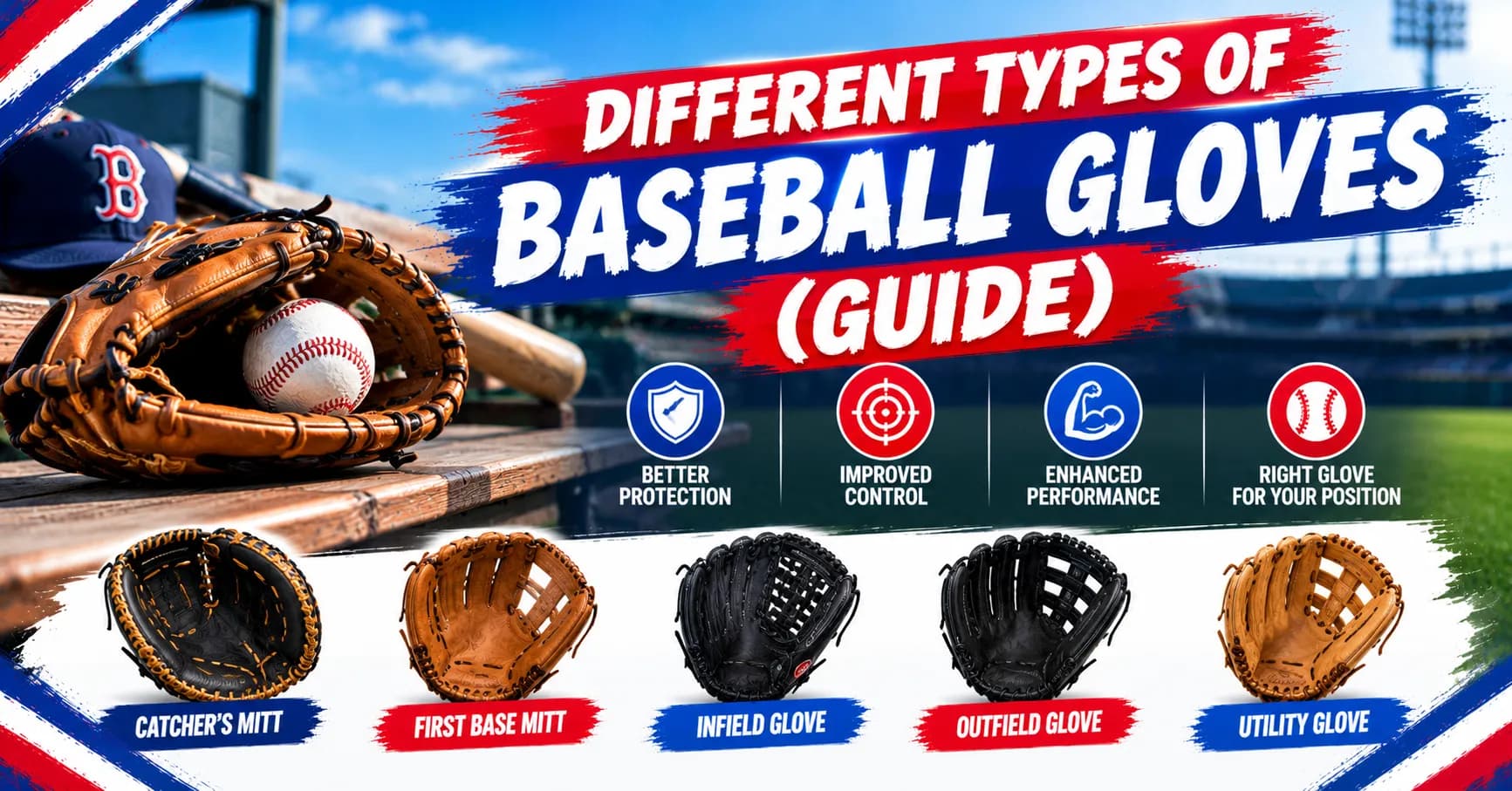
There are six main types of baseball gloves: catcher's mitts, first base mitts, middle infield gloves, third base gloves, outfield gloves, and pitcher's gloves. Each one is built around a single job. A shortstop needs to get the ball out fast. A center fielder needs reach. A catcher needs to survive 120 fastballs a night without his hand going numb.
That's why a glove that's perfect at one position can be a liability at another. Put a 12.75-inch outfield glove on a second baseman and he'll be digging for the ball on every double play turn. Put an 11.25-inch infield glove on a left fielder and he'll come up an inch short on the ball he should've caught at the wall.
I've broken in more gloves than I can count, from $40 youth models to pro-grade leather that took a full season to get right. Here's what actually separates one glove from another, which one fits your position, and how to buy right the first time, whether you're shopping for a 7-year-old or your own beer-league return.
The Parts of a Baseball Glove, in Plain English
Every glove type changes the same handful of parts. Know these five, and the rest of this guide will make sense.
- Pocket: The area where the ball lands, between the thumb and index finger. Deep pockets hold the ball securely. Shallow pockets let you get it out quickly.
- Web: The laced or leather piece connecting the thumb and index finger. It can be open, where you can see through it, or closed, where you can't.
- Heel: The padded bottom of the glove near your wrist. A stiff heel helps the glove keep its shape.
- Back: The part over the back of your hand. It can be open, with a gap above the wrist strap, or closed. Some closed backs also have a hole for your index finger.
- Wrist adjustment: The strap, buckle, or Velcro that locks the glove onto your hand. A loose glove gets knocked off on hard-hit balls.
Gloves are measured from the tip of the index finger down to the heel, along the inside of the glove. So when you see "11.5 inches," that's the length of the glove, not the size of your hand. Catcher's mitts are the exception: they're measured around the outside edge using circumference.
Every Type of Baseball Glove, Position by Position
Here's the quick version, then we'll go through each glove type.
| Position | Glove Type | Typical Adult Size | Common Webs | |
|---|---|---|---|---|
| Catcher | Catcher's mitt | 32–34 inches (circumference) | Deep, heavily padded | Closed, one-piece or half-moon |
| First base | First base mitt | 12–13 inches | Deep channel | Closed basket or single bar |
| Second base / shortstop | Middle infield glove | 11–11.5 inches | Shallow | I-web, H-web, single post |
| Third base | Infield glove | 11.5–12 inches | Medium | H-web, closed two-piece |
| Pitcher | Pitcher's glove | 11.5–12 inches | Medium | Closed basket, two-piece, modified trap |
| Outfield | Outfield glove | 12–12.75 inches | Deep | Trapeze, H-web |
These sizes are approximate starting points. The right size also depends on the player's age, hand size, position, and ability to control the glove.
Catcher's Mitt
The catcher's mitt is the most specialized glove on the field. It has no individual fingers, just a rounded, heavily padded shell built to absorb fastball after fastball.
It's measured by circumference around the outer edge, usually 32 to 34 inches for high school and adult catchers. MLB caps it at 38 inches around under its applicable rules.
That padding is the whole point. A good catcher's mitt helps absorb repeated impacts and gives the catcher a secure pocket for receiving pitches. Only the catcher can wear one during play.
First Base Mitt
A first baseman catches more throws than almost anybody except the catcher, and a lot of those throws arrive in the dirt. The first base mitt is longer than a regular glove, has no separate fingers, and has a long, deep channel that works like a scoop.
MLB limits a first baseman's mitt to 13 inches long and 8 inches wide across the palm under its applicable rules.
The extra length lets a first baseman stretch for a wide throw and dig out a short hop that would bounce off a normal glove. If your kid plays first base full time, it's worth buying the right mitt.
Middle Infield Glove: Second Base and Shortstop
These are the smallest gloves on the field, usually 11 to 11.5 inches. They have shallow pockets because a middle infielder's job is to catch the ball and get rid of it in the same motion. Think about turning a double play or ranging into the hole and throwing across your body.
A deep pocket costs a shortstop a split second while he digs for the ball, and that's often the difference between an out and a runner on first. Second basemen tend to go even smaller than shortstops because their throws are shorter and the double-play turn is quicker.
Third Base Glove
Third base is called the hot corner for a reason. Right-handed pull hitters rocket line drives and one-hoppers down the line, and the third baseman has very little time to react.
Third base gloves run a little bigger than middle infield gloves, usually 11.5 to 12 inches, with a slightly deeper pocket and a sturdy web.
The throw from third is longer, but the transfer doesn't have to be as lightning-quick as at short. A third baseman needs to knock down and hold on to the ball first.
Pitcher's Glove
A pitcher's glove is mostly about hiding the pitch. Pitchers grip the ball inside their glove before each pitch, and an open web can let a hitter or base coach see whether it's a fastball or a curveball grip. That's why pitchers often use closed webs.
There's a color rule too. In MLB, a pitcher's glove can't be white or gray, or any color the umpire finds distracting under the applicable rules. The reason is simple: a hitter shouldn't have to pick a white ball out of a white glove.
Most pitchers use an 11.5- to 12-inch glove, which is big enough to hide the grip and still field a comebacker.
Outfield Glove
Outfield gloves are the longest fielder's gloves, usually 12 to 12.75 inches. MLB's limit for a fielder's glove is 13 inches under the applicable rules.
The extra length gives an outfielder reach on diving catches and balls at the wall, while the deep pocket helps secure the ball when landing. Center fielders often prefer the upper end of the size range because they cover large areas of ground.
Outfielders give up some transfer speed for that reach, which is a fair trade when their main job is making sure the ball doesn't hit the grass.
Utility Gloves
If your kid plays a little bit of everywhere, which describes most recreational and Little League players, a utility glove in the 11.5- to 11.75-inch range can be a smart buy. It's big enough for some outfield work and small enough for the infield.
Don't try to use a catcher's mitt or first base mitt as an all-purpose glove. They are designed for their specific positions.
Glove Web Types: Open vs. Closed
The web matters almost as much as the size. Open webs let you see through the glove and let dirt fall out, and they're usually lighter. Closed webs hide the ball and provide more coverage, but their feel and transfer speed depend on the individual design.
| Web Type | Open or Closed | What It's Good For | Best Positions |
|---|---|---|---|
| I-web | Open | Light, fast transfers, lets dirt fall through | Second base, shortstop |
| H-web (dual post) | Open | Strong and sturdy, still lets you see the ball | Third base, outfield |
| Single post | Open | Flexible and quick | Middle infield, some first base gloves |
| Trapeze | Open | Deep pocket for catching on the run | Outfield |
| Basket | Closed | Hides the grip and provides a secure pocket | Pitcher, some first base gloves |
| Two-piece closed | Closed | Hides the grip and supports hard-hit balls | Pitcher, some third base gloves |
| Modified trapeze | Partially or mostly closed, depending on design | Deep pocket with more coverage | Pitcher, some outfield gloves |
The key rule for pitchers is to use a web that conceals the grip. Open webs such as I-webs and H-webs can reveal the grip to hitters and base coaches.
For everybody else, the web is mostly a feel and preference decision. Some infielders prefer a closed web because they like the extra structure. If you're between two gloves, try both and choose the one that feels natural.
Youth Baseball Glove Sizes by Age
For young players, age is a decent starting point. From about 12 years old on, the player's position and hand size often matter more than age alone.
| Age | Level | Typical Glove Size |
|---|---|---|
| 3–4 | First glove, backyard catch | 8.5–9 inches |
| 5–7 | Tee ball and coach pitch | 9–10.5 inches |
| 8–9 | Kid pitch | 10.5–11 inches |
| 10–11 | Recreational and travel ball | 11–11.5 inches |
| 12–13 | 12U and 13U | 11.25–11.75 inches |
| 14–15 | 14U and high school freshman | 11.5–12 inches |
| 16 and up | High school varsity and adult | Adult size by position |
These size ranges are approximate. Always consider the player's hand size, position, and ability to close the glove.
The biggest mistake I see with young kids is a glove that's way too big. Parents buy an 11.5-inch glove for a 6-year-old so they can grow into it. The kid can't close it, so every ball bounces off the palm, and he starts flinching.
A small, soft glove a kid can actually squeeze shut builds confidence, and confidence is what makes a young player want to keep playing.
A quick test works at any age: have the player put the glove on and squeeze it closed with one hand. If they can't close it without using their other hand, it may be too big or too stiff.
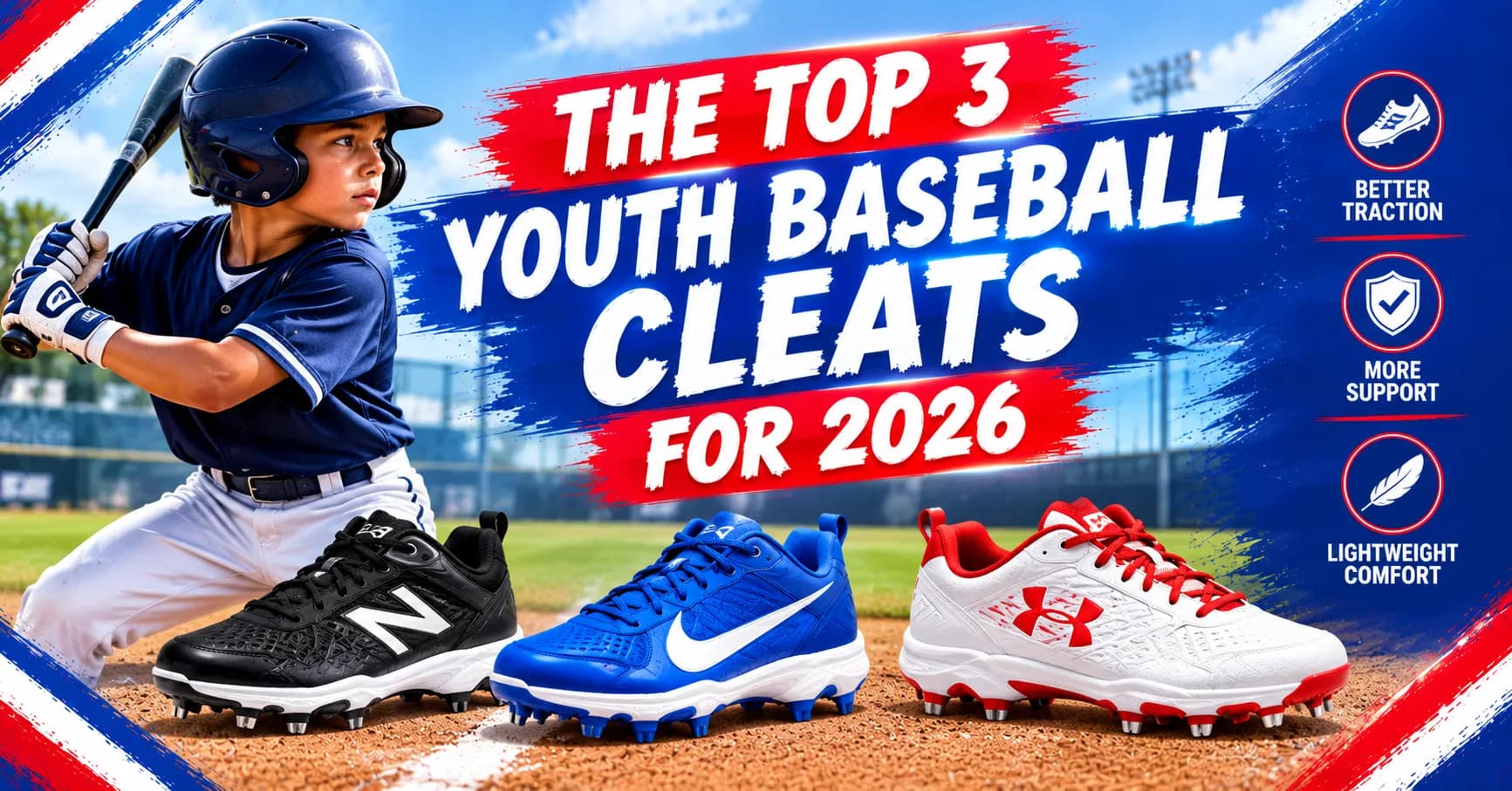
While choosing equipment for a young player, don't overlook footwear either. Our guide to the top 3 youth baseball cleats for 2026 compares options for fit, traction, comfort, and budget.
Leather, Fit, and Break-In
The leather decides how soon a glove is game-ready and how long it lasts. Softer leather is ready sooner, while stiffer leather takes longer to break in and may hold its shape for years.
| Material | Break-In | Durability | Best For |
|---|---|---|---|
| Synthetic | Ready right away | Shorter lifespan | First gloves, tee ball |
| Pigskin | Very quick | Wears out sooner | Young or casual players |
| Cowhide | Quick | Good | Youth and recreational players |
| Steerhide | Long | Very good | Serious high school and adult players |
| Kip | Quick, soft out of the box | Very good | Elite and professional players |
| Full-grain leather | Longest | Can last for years with care | High-level players willing to put in the work |
For kids under 10, soft cowhide or even a good synthetic glove makes sense. They can close it on day one, and they'll often outgrow it before it wears out. Save the steerhide and kip for players who'll use the same glove for several seasons.
How a Glove Should Fit
A glove should be snug, not tight, and the player should be able to move their fingers inside it. Many infielders slide their index finger out the back of the glove for better control and a little extra padding on hard-hit balls. That's personal preference, not a rule.
How to Break In a Glove the Right Way
The best way to break in a glove is the old-school way: play catch with it. A lot of it. Here's what works:
- Play catch daily: Nothing shapes a pocket like real throws landing in it.
- Work the leather by hand: Open and close the glove, and fold the thumb and pinky toward each other while watching TV.
- Use glove oil sparingly: A thin coat on the outside can soften stiff leather. Too much makes it heavy and floppy.
- Store it with a ball in the pocket: Wrap it with a rubber band or glove wrap overnight to help set the pocket shape.
- Skip the shortcuts: Ovens, microwaves, and car dashboards in July can dry out the leather and damage the laces. The same goes for soaking a glove in water or running it over with a car. These methods can shorten its life.
How Much to Spend, Mistakes to Avoid, and Glove Care
A glove is one piece of gear worth stretching your budget for once a player is serious. A good leather glove can last five or more seasons, while other baseball equipment may need replacing sooner. That said, a 7-year-old doesn't need pro leather.
- Under $50: Synthetic or soft youth leather for tee ball and coach pitch. Perfect for little kids.
- $75 to $150: Solid cowhide or entry-level steerhide. This can be the sweet spot for many 9- to 14-year-olds.
- $200 to $300: Serious steerhide or kip for high school players who'll use the glove for years.
- $300 and up: Pro-level leather and custom gloves. Worth considering for committed varsity or college players, not necessary for casual recreational use.
Catcher's mitts and first base mitts usually cost a little more at every level because they use more leather and more padding.
Common Glove-Buying Mistakes
- Buying too big for a young kid: If they can't squeeze it shut, it's too big or too stiff. Buy for this season.
- Giving a pitcher an open web: They may reveal their grip and tip their pitches. Choose a web that conceals the grip.
- Using a shortstop glove in the outfield, or the reverse: Each glove is built for a different job.
- Buying the wrong hand: The glove goes on the hand that does not throw. A right-handed thrower wears a glove on the left hand, often labeled "RHT" (right-hand throw).
- Skipping break-in before the season: A stiff, brand-new glove on opening day can contribute to errors. Buy it a few weeks early when possible.
How to Make a Glove Last
- Keep it dry: If it gets soaked, let it air-dry slowly at room temperature, not next to a heater.
- Clean off dirt: Wipe it down with a damp cloth after muddy games. Dirt can dry the leather out.
- Condition once or twice a season: A light coat of suitable glove conditioner can help prevent the leather from drying and cracking.
- Store it with a ball in the pocket: Never leave it flat at the bottom of a bat bag with bats crushing it.
- Relace when needed: A broken lace doesn't mean a new glove. Many sporting goods stores and glove repair shops can replace laces for less than the cost of a new glove.
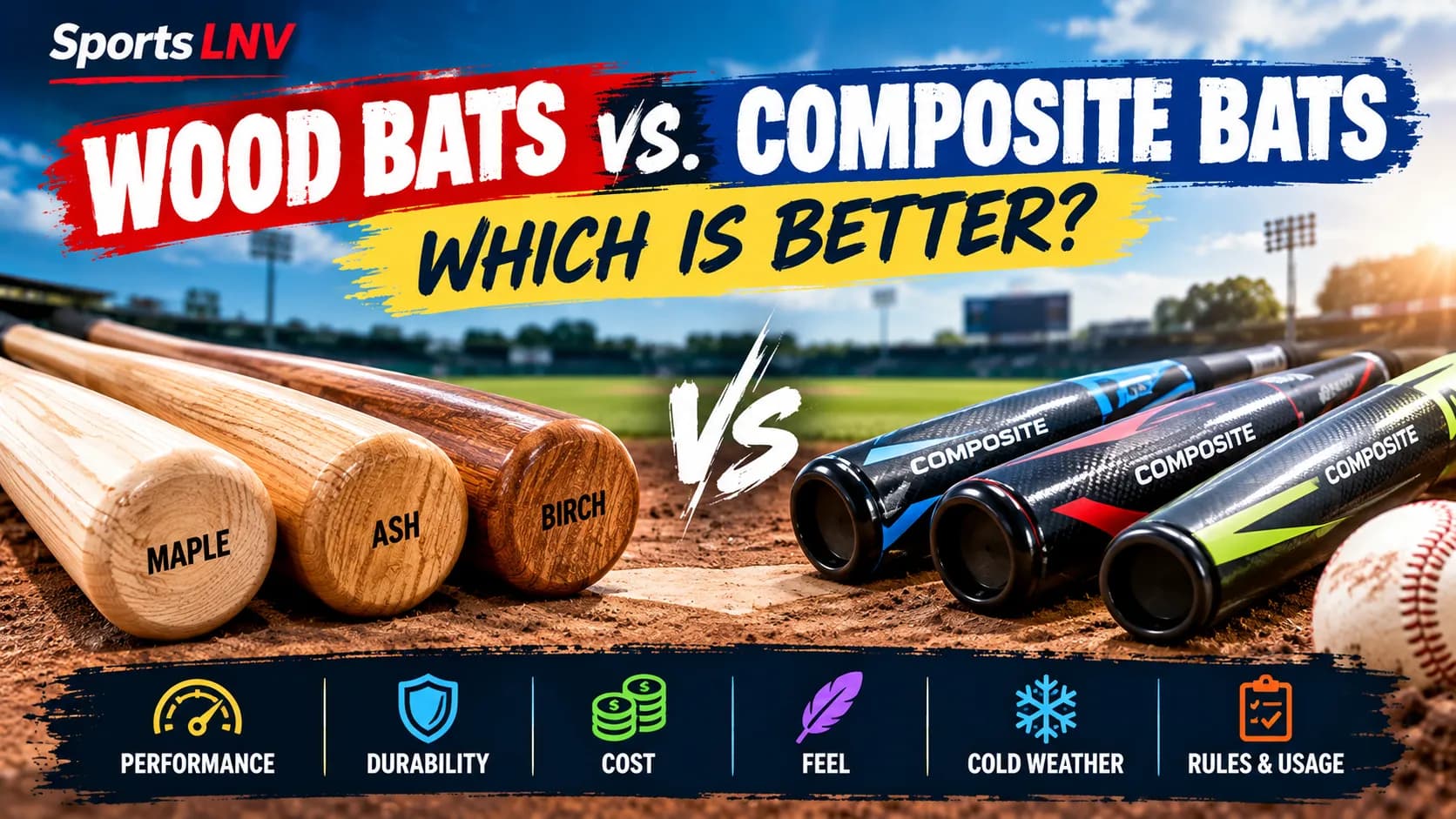
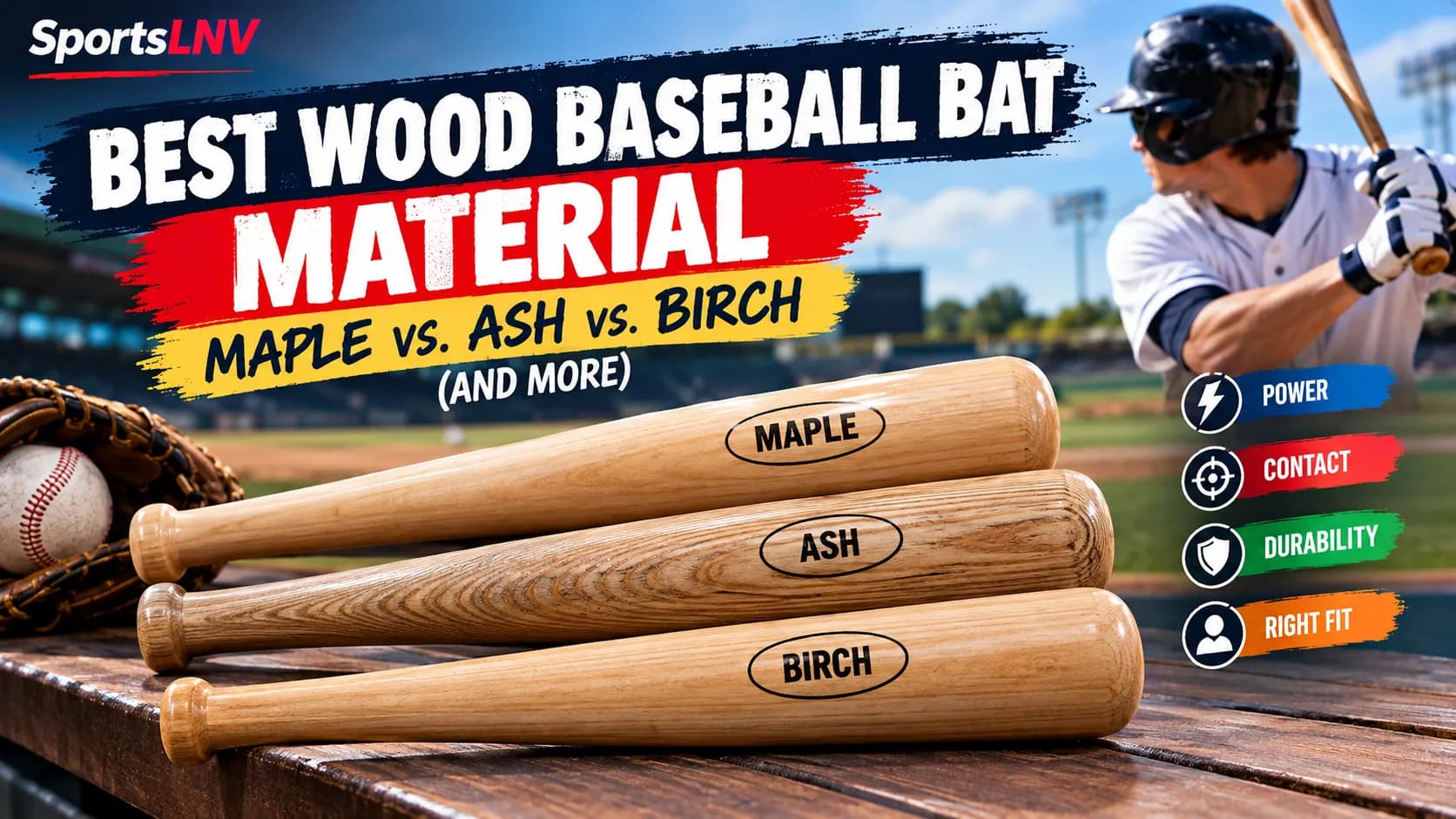
If you're also comparing other baseball equipment, our guide to the best wood baseball bat material explains the differences between maple, ash, and birch, while our comparison of wood bats vs. composite bats covers durability, feel, cost, and training use.
Baseball Glove FAQs
What Are the Different Types of Baseball Gloves?
There are six main types: catcher's mitts, first base mitts, middle infield gloves for second base and shortstop, third base gloves, pitcher's gloves, and outfield gloves. Utility gloves split the difference for players who move around.
What Size Glove Should an Infielder Use?
Most adult middle infielders use an 11- to 11.5-inch glove, while third basemen often use an 11.5- to 12-inch glove. Smaller gloves can make it faster to get the ball out.
What Size Glove Should an Outfielder Use?
Adult outfielders usually use a 12- to 12.75-inch glove with a deep pocket. MLB's maximum for a fielder's glove is 13 inches under the applicable rules.
Why Do Pitchers Use Closed-Web Gloves?
A closed web helps hide the pitcher's grip so the hitter and base coaches can't easily tell what pitch is coming.
What's the Difference Between a Glove and a Mitt?
Gloves have individual fingers. Mitts, which are mainly used by catchers and first basemen, don't have individual finger stalls and have extra padding and deeper pockets for catching throws.
Can You Use a Softball Glove for Baseball?
It's not ideal. Softball gloves have larger, deeper pockets made for a larger ball, so a baseball can sit differently inside them. Fastpitch gloves may also fit a smaller hand. A baseball-specific glove is generally the better choice.
What Size Glove Should a 10-Year-Old Use?
Many 10-year-olds use an 11- to 11.5-inch glove. If the child plays mostly infield or has small hands, try the smaller end of the range. Fit and the player's ability to close the glove matter more than age alone.
How Long Does It Take to Break In a Glove?
It depends on the leather and construction. Soft cowhide gloves can become game-ready relatively quickly, while stiff steerhide and full-grain gloves may take a month or more of regular use.
The Bottom Line
The right baseball glove matches the position first, the player's size second, and the budget third. Infielders want small and quick. Outfielders want long and deep. Pitchers need a closed web, and catchers and first basemen need a true mitt.
Buy the right type, make sure your player can close it, and put in the time playing catch. A well-fitted, well-broken-in glove can follow a player from Little League to the varsity field, and it's often the piece of gear they keep long after they hang up the cleats.