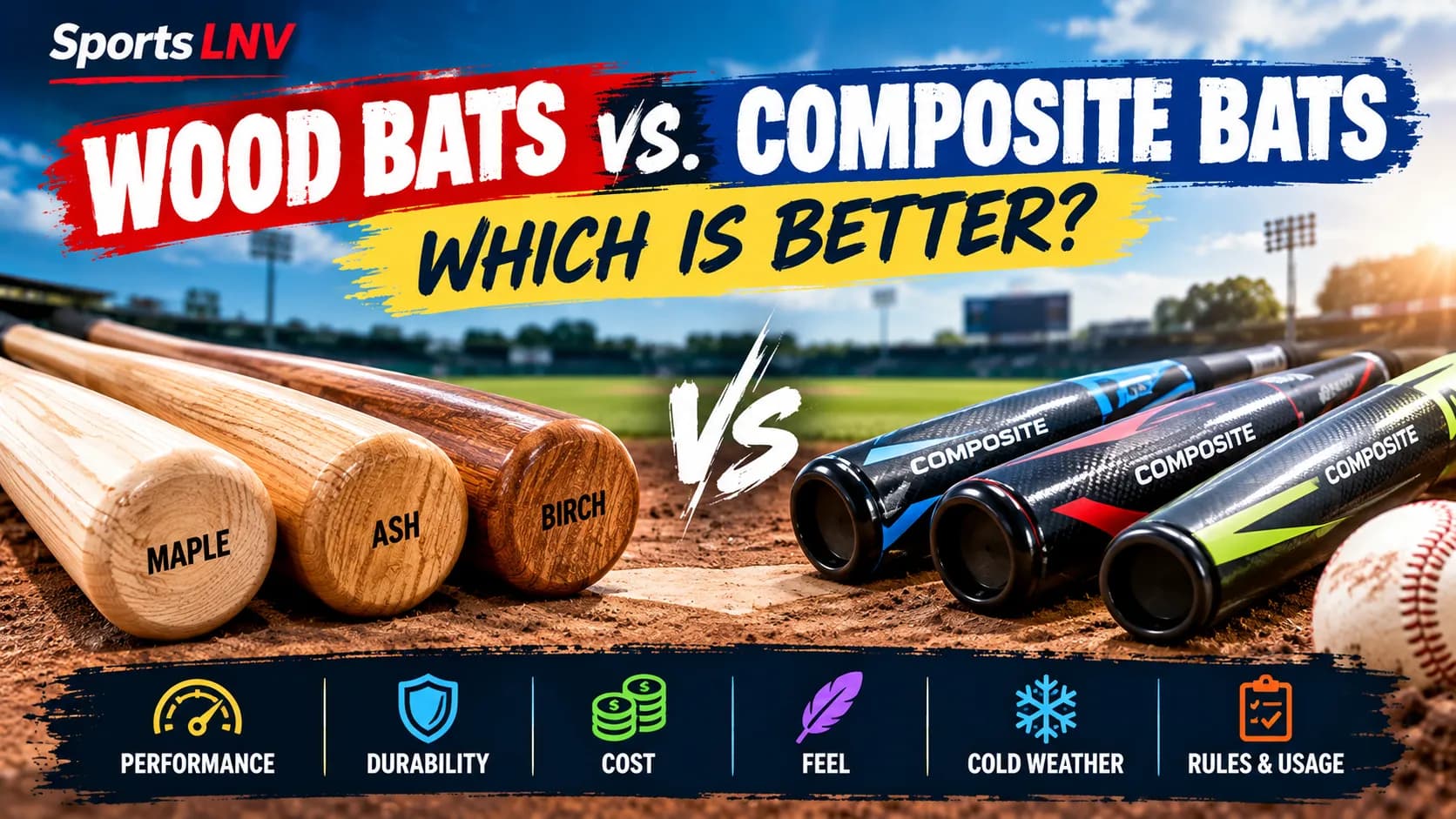
Neither bat is better across the board. A composite bat is the better game bat at nearly every level below pro ball, because it swings lighter, stings less, and has a bigger sweet spot. A wood bat is the better teacher, and it's the only option once a player reaches pro ball or a wood-bat league. Most serious hitters should own both.
That's not a cop-out. It's how the best hitting programs in the country actually work. Players swing composite on game day and wood in the cage, because wood shows them every flaw in their swing and composite rewards the work they've put in.
I've swung both for years, coached kids through the switch, and watched plenty of parents spend $400 on the wrong one. Here's an honest breakdown of performance, durability, cost, feel, and rules, plus a straight answer on which one your player should buy.
Wood vs. Composite at a Glance
| Feature | Wood Bat | Composite Bat |
|---|---|---|
| Exit velocity | Lower, especially on mishits | A few mph higher in testing |
| Sweet spot | Small; mishits are punished | Larger and more forgiving once broken in |
| Swing weight | Heavier for the same length | Lighter; drops from -3 to -13 |
| Sting on mishits | High, especially in cold weather | Low; carbon fiber dampens vibration |
| Break-in | None | A few hundred hits |
| Durability | Can break on a single jam shot | Lasts one to three seasons with care |
| Warranty | Often 90 days or less | Usually 12 months or more |
| Cold weather | Fine to swing, but breaks more easily | Can crack below about 60°F |
| Typical price | About $50–$200 | About $150–$500 |
| Training value | Excellent; shows every flaw | Moderate; hides some mistakes |
| Where it's legal | Nearly everywhere, including MLB | Youth, high school, and college; never MLB |
Warranty comparisons are based on Bat Digest's wood vs. USA Bat comparison. Prices are typical retail ranges and vary by brand and playing level.
Performance: Does Composite Really Hit Farther?
Yes, but not by as much as most people think. Today's youth, high school, and college bats are regulated to perform close to wood. The difference comes mostly from a lighter swing and a more forgiving barrel, not from a trampoline-like barrel.
What the Testing Shows
Bat Digest had three young hitters take more than 300 swings with a USA Baseball composite bat and a maple wood bat. The composite bat produced higher exit velocities in the reported testing.
| Hitter | Composite Exit Velocity | Wood Exit Velocity | Difference | Extra Distance on a Well-Hit Ball |
|---|---|---|---|---|
| 11-year-old | 55.6 mph | 53.4 mph | +2.2 mph | About 11 ft |
| 13-year-old | 61.8 mph | 57.8 mph | +4.0 mph | About 20 ft |
| 14-year-old | 65.5 mph | 61.3 mph | +4.2 mph | About 21 ft |
Twenty feet is the difference between a fly out on the warning track and a ball off the wall. For a high school hitter fighting for at-bats, that can matter.
Why the Gap Is Small
The rules are designed to keep performance differences small. The BBCOR standard caps non-wood bats at a rating of .50, and a good wood bat typically tests in the mid-.40s, according to The National Pastime Museum.
USA Baseball explains its bat-performance standards in the USABat FAQ. Modern standards are designed to limit the performance of approved youth and school bats.
Compare that with the early 2000s, when unregulated metal bats were much hotter. A 2002 Brown University study found that the fastest metal bat averaged 93.3 mph off the bat, compared with 86.1 mph for the slowest wood bat. Read the report on ScienceDaily.
Where Composite Still Wins
- Sweet spot: A broken-in composite barrel can forgive contact an inch or two off the barrel's center. With wood, that same swing can become a weak ground ball or a jam shot that stings.
- Swing weight: Composite bats can be built much lighter for their length. A youth player can swing a -10 composite, while the same length in wood might weigh 6 or 7 ounces more.
- Confidence: Bat Digest reported that one of its younger testers stopped swinging as hard with wood because the sting hurt. A player who is afraid of the bat may become less aggressive at the plate. See Bat Digest's testing.
Durability, Cost, and Cold Weather
This is where the answer flips, depending on how you look at it.
Wood breaks easily. One jam shot on a cold April night can split a $120 maple bat in two. Most wood bats carry a short warranty, often 90 days or less, compared with 12 months or more for many composite and metal bats, according to Bat Digest.
Composite costs more up front and fails in its own ways. A good composite bat often costs $250 to $450. Composite barrels can crack when the temperature drops, and many players switch to wood or alloy below about 60°F. A worn-out composite barrel can also develop internal damage without showing much damage on the outside. See The National Pastime Museum.
Here's how the math usually works out for a high school player:
- Composite: One $350 bat, used carefully, can last a season or two of games.
- Wood for games: A team that swings wood in games might go through several $80 to $150 bats in a season, depending on the player and the wood.
- Wood for practice only: One $70 to $100 bat can last a long time if it's used off a tee and in soft toss, where there are fewer jam shots.
That last option is the one I recommend most often. A practice wood bat is an affordable training aid in baseball, and it doesn't take the composite's place in the lineup.
Feel, Sting, and Training Value
This is where wood earns its place in every serious hitter's bag.
Wood tells the truth. Hit it on the sweet spot and it feels like nothing at all. Miss by an inch and your hands buzz for the next three pitches. That instant feedback can teach a hitter to keep the hands inside the ball, stay short to it, and barrel up pitches rather than muscle them. A composite bat can let a hitter get away with a less precise swing that a pro pitcher would punish.
Wood builds strength. A wood bat is often heavier for the same length, so batting practice with one can work the hands, forearms, and core harder. When a player picks the composite back up for a game, it may feel quick and light.
Composite builds confidence. For a 9-year-old, the most important thing is wanting to come back next season. A light composite bat that doesn't sting as much can help a young hitter stay aggressive and enjoy the game. That matters alongside mechanics at that age.
Scouts value wood too. Summer collegiate leagues like the Cape Cod League and many showcase events use wood bats because they provide a different evaluation environment. A high school junior who hits well with wood may demonstrate skills that are harder to assess using only a forgiving composite bat.
Where Each Bat Is Legal
A solid, one-piece wood bat is legal in many leagues. A composite bat needs the correct certification stamp for the league and division.
| Level | Wood Bat | Composite Bat |
|---|---|---|
| Little League and most recreational leagues | Generally legal; solid one-piece wood bats typically need no certification stamp | Must meet the league's applicable USA Baseball requirements |
| USSSA travel ball | Generally legal | Must meet the applicable USSSA requirements; restrictions can vary by event and age group |
| High school | Generally legal | BBCOR certification is required where applicable under high school rules |
| College (NCAA) | Generally legal | Must satisfy applicable NCAA bat standards, including BBCOR requirements |
| Wood-bat summer leagues and many showcases | Required | Not allowed where league rules require solid wood |
| MLB and minor league baseball | Required: one piece of solid wood | Not allowed |
Official rule references include Little League bat rules, the USABat FAQ, and Official Baseball Rules, Rule 3.02.
One important distinction: "composite wood" bats, which mix wood with resin or composite layers, are not the same as solid wood bats. In leagues that use the USA Baseball standard, multi-piece and composite wood bats need the appropriate certification, while solid one-piece wood bats generally do not. Always check the bat's stamp and your league's current rules before game day.
Which One Should You Buy?
Here's a practical recommendation for each type of player.
| Player | Game Bat | Practice Bat | Why |
|---|---|---|---|
| Ages 5–8, just learning | Light composite or alloy USA bat | None needed initially | Fun and confidence come first |
| Ages 9–12, recreational or Little League | Composite or hybrid with the correct certification | Optional youth wood bat for tee work | A wood bat can start building barrel control |
| Ages 13–14, travel ball | Bat approved for the league and division | Wood bat | Prepares players for the transition to wood-bat settings |
| High school | BBCOR composite or alloy where required | Wood bat used regularly | Composite for games, wood to sharpen the swing |
| College hopeful | Approved bat for school games | Wood for summer ball and showcases | Develops hitting skills in wood-bat settings |
| Adult men's league | Whatever the league allows | Wood if appropriate | Many adult leagues are wood-only |
| Cold-weather player | Alloy or wood early in spring | Wood | Can reduce the risk of damaging a composite bat in cold conditions |
If you're on a tight budget and have to pick just one, buy the legal composite or alloy bat for games. Then add a $70 wood bat when you can. That inexpensive bat can be a useful way to work on hitting mechanics without upgrading from a $250 composite to a $450 one.
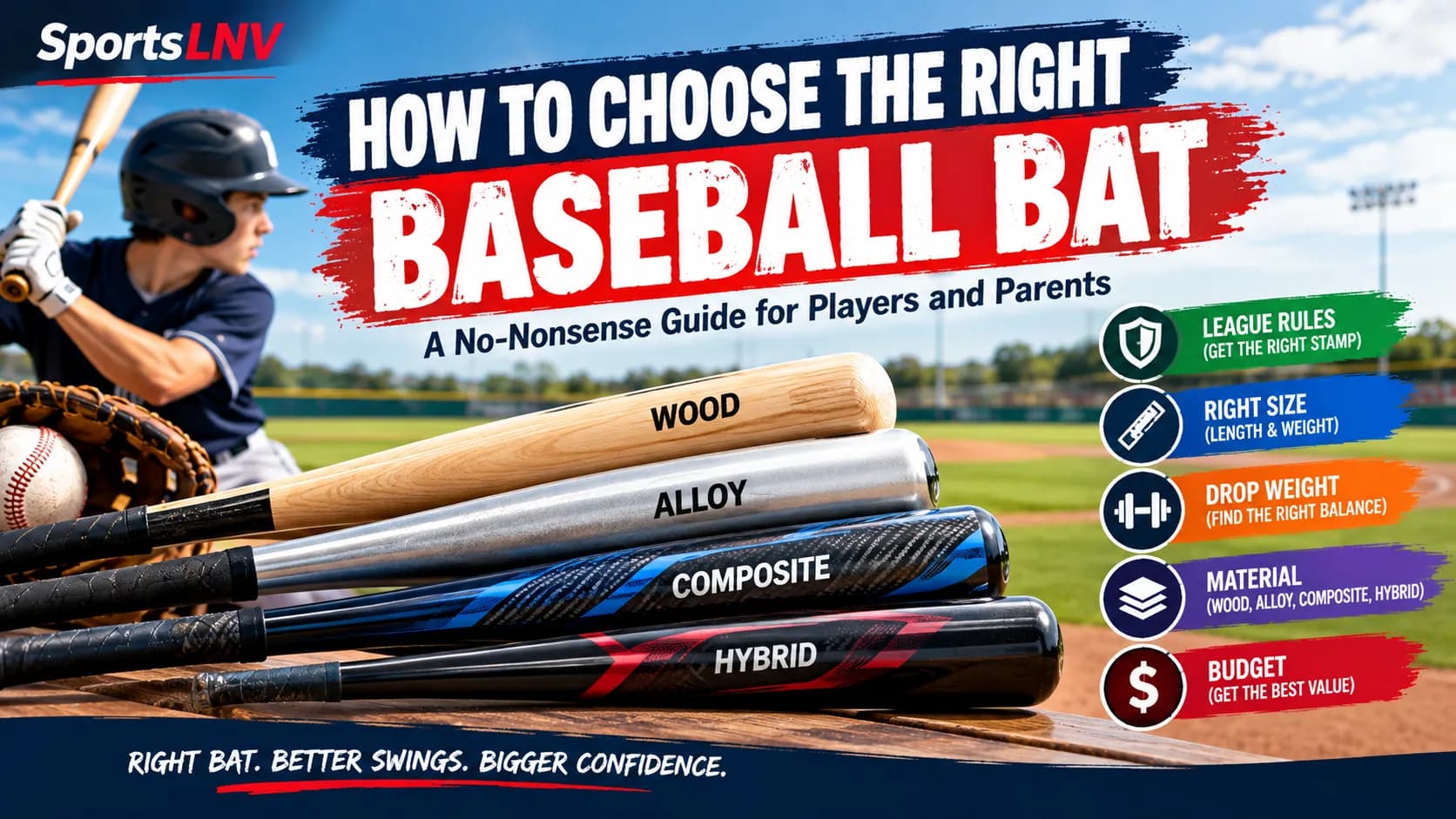
Want help picking the right game bat? See our guide on how to choose the right baseball bat for league certification, sizing charts, and budget tips.
Wood vs. Composite Bat FAQs
Is a Wood Bat Better Than a Composite Bat?
It depends on the goal. A composite bat can be better in games because it is lighter, more forgiving, and may produce higher exit velocities in certain tests. A wood bat is useful for training and is required in MLB and wood-bat leagues.
Do Composite Bats Hit Farther Than Wood?
They can. In Bat Digest's reported testing, a composite bat produced 2 to 4 mph more exit velocity than wood for the youth hitters tested, corresponding to about 11 to 21 feet of additional distance on a well-struck ball. Results vary by player, bat, and conditions.
Why Do Pros Use Wood Bats Instead of Composite?
MLB Rule 3.02 requires a one-piece solid wood bat. The rule helps maintain the game's established equipment standards and keeps its records comparable across eras.
Can You Use a Wood Bat in Little League?
Generally, yes. A solid one-piece wood bat is permitted in Little League without a USA Baseball stamp, while multi-piece or composite wood bats must meet the applicable certification rules.
Can You Use a Wood Bat in High School Baseball?
Yes. A solid wood bat is generally legal in high school baseball. However, equipment requirements can differ by competition, so check the current rules for your league.
Do Wood Bats Help You Become a Better Hitter?
They can. Wood can make mishits more noticeable and reward well-centered contact, helping players work on barrel control. Wood bats may also be heavier for their length, which changes the training demands.
Why Do Composite Bats Crack in Cold Weather?
Cold temperatures can affect the material properties of composite bats, making some models more vulnerable to damage. Follow the manufacturer's recommended temperature limits rather than assuming every composite bat has the same cutoff.
Which Lasts Longer, Wood or Composite?
Composite bats often last longer during routine use when handled and stored correctly. A wood bat can break on a single jam shot, while a well-cared-for composite bat may last a season or two of games. Actual lifespan varies by model, usage, and conditions.
The Bottom Line
For many youth, high school, and college players, a properly certified composite bat is a practical game-day choice. It can be lighter, more forgiving, and may offer higher exit velocity in certain tests. For training, wood can help players focus on solid contact. Wood is also required once a player reaches professional baseball and many wood-bat leagues.
So the real answer to "wood or composite?" is often both. Use a legal composite bat on game day and wood in the cage when appropriate. Players who advance to higher levels benefit from learning to square up the ball consistently, regardless of which bat they use in games.