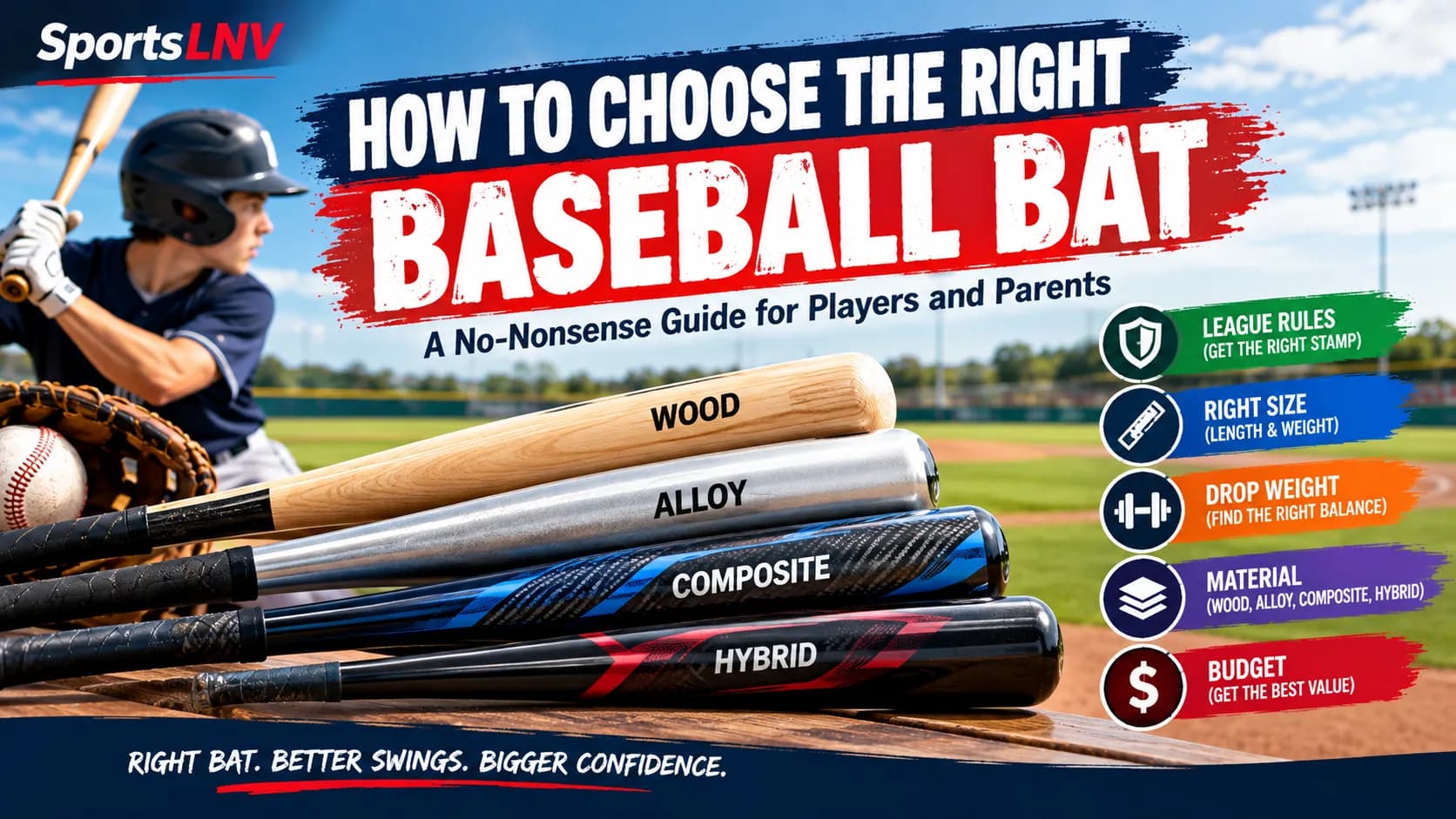
How to Choose the Right Baseball Bat: A No-Nonsense Guide for Players and Parents
The right baseball bat comes down to three things, in this order: your league has to allow it, the player has to be able to swing it fast, and it has to fit your budget. Almost every bad bat purchase I've seen breaks one of those three rules.
I've watched it happen every spring for years. A parent walks into the sporting goods store, grabs the bat with the loudest paint job and the biggest price tag, and two weeks later the umpire tosses it at the plate meeting because it's missing the right stamp. Or the kid can't get it through the zone before the fastball is in the catcher's mitt, so it sits in the dugout while he borrows a teammate's.
A good bat won't turn a .200 hitter into an All-Star. A bad one can absolutely make a decent hitter look lost. So let's walk through this the way I'd walk a family through it in the parking lot after tryouts: what to check first, how to size it, and where your money actually makes a difference.
Step 1: Find Out Which Bat Stamp Your League Requires
Before you think about length, weight, or brand, flip the bat over and look at the certification stamp on the taper. If it's the wrong stamp for your league, the bat is illegal. It doesn't matter if you paid $49 or $449.
There are three stamps that matter in youth and amateur baseball in the U.S., plus wood:
- USA Baseball (USABat): This is the standard for most recreational and community baseball. It's built to perform close to wood. Little League has required it since January 1, 2018, and it bans every bat marked BPF 1.15. Check the official Little League bat rules.
- USSSA 1.15 BPF: This is the travel-ball stamp, shaped like a thumbprint. The barrel is livelier, so the ball can come off it harder. It's legal in applicable USSSA play and illegal in Little League.
- BBCOR .50: This is the high school and college standard under the applicable rules. These bats are typically a drop 3, meaning the weight in ounces is 3 less than the length in inches. Check the current requirements for your competition.
- Wood: A solid one-piece wood bat is legal in many leagues. Little League does not generally require a USA Baseball stamp on a solid one-piece wood bat.
Where Your Player Plays
| League or Division | Stamp or Bat Type | Maximum Length |
|---|---|---|
| Little League Minors and Majors | USABat | 33 inches |
| Little League Intermediate (50/70) and Junior League | USABat or BBCOR | 34 inches |
| Little League Senior League | BBCOR or one-piece wood | 36 inches |
| USSSA travel ball, 13U and younger | USSSA 1.15 BPF; USABat also allowed under applicable rules | Varies by event |
| USSSA 14U national events (since January 1, 2026) | BBCOR -3 or wood | Varies by event |
| High school (NFHS) and college (NCAA) | BBCOR .50 under applicable rules | Check competition rules |
Little League caps barrels at 2-5/8 inches in its baseball divisions. Cal Ripken, PONY, Dixie Youth, and other recreational programs may also use the USA stamp, but confirm the current rule with your league. Requirements differ by age group, and a lot of the bad information out there comes from a teammate's dad who coached three seasons ago.
Two Rule Changes Parents Keep Missing
USSSA 14U moved to BBCOR for national events. Starting January 1, 2026, USSSA's national 14U events require a BBCOR -3 or wood bat, according to the rule details supplied for this guide. Some state and local events may have different requirements, so verify the rules for your exact tournament before buying.
If your kid is 13 and playing travel ball, don't spend $350 on a USSSA -5 bat without checking how long they'll be allowed to use it in their planned competitions.
High school bat options are scheduled to change in 2028. The supplied source material says the NFHS voted to allow USABat -4, -5, and -6 drop bats in high school starting with the 2028 season, alongside existing BBCOR bats. Verify the current NFHS and USA Baseball announcements before relying on this change to make a purchase.
If the new options become available as described, they may help some younger high school players who struggle to swing a 29-ounce BBCOR bat. Do not buy a future-standard bat before confirming its approval and availability for your league.
Step 2: Get the Length Right
Length controls reach, and kids almost always want a longer bat than they can handle. Start with a chart, then confirm with three quick tests at home.
| Age | Typical Bat Length | Typical Drop | Usual Stamp |
|---|---|---|---|
| 5–7 (tee ball, coach pitch) | 24–26 inches | -11 to -13 | USABat Tee Ball or Youth |
| 8–9 | 26–28 inches | -10 to -12 | USABat or USSSA, depending on league |
| 10 | 28–29 inches | -10 to -11 | USABat or USSSA, depending on league |
| 11–12 | 29–30 inches | -8 to -10 | USABat or USSSA, depending on league |
| 13–14 | 31–32 inches | -5 to -8, or -3 | USABat, USSSA, or BBCOR, depending on league |
| 15 and up (high school) | 32–34 inches | -3 | BBCOR under applicable rules |
These are starting points, not strict sizing rules. Tater Baseball's sizing charts use a player's age, height, and weight to suggest appropriate lengths. Many Little League players end up with a -10 or -11 drop, according to The National Pastime Museum.
One more detail: USA Baseball's current bat requirements include a maximum length of 32 inches for USABat models. So even though some Little League rules allow bats up to 33 inches, a 12-year-old using a USABat cannot simply choose a 33-inch model. Verify current specifications in the USABat FAQ.
Height and weight matter more than age. A big 10-year-old and a small 12-year-old can wear the same bat. When the chart gives you two answers, go with the shorter one as a starting point and test the swing.
Three At-Home Fit Tests
- Chest test: Put the knob at the center of the chest and point the bat straight out to the side, toward the outstretched arm. If the player's fingertips can reach the end of the barrel, the length is close.
- Side test: Stand the bat on its end beside the leg. The knob should reach about the middle of the palm when the arm hangs straight down.
- Hold-out test: This one tests weight as much as length. Have the player grip the handle with the top hand and hold the bat straight out to the side. If the barrel starts sagging within 20 to 30 seconds, the bat may be too heavy or too long.
The real test is the swing. Have them take 10 dry swings. If the barrel drops below the hands, the back shoulder dips, or they start swinging like they're chopping wood, size down. A bat a kid can't control isn't something to grow into. It's a slump in waiting.
Step 3: Understand Drop Weight
Drop weight is the bat's length in inches minus its weight in ounces. A 30-inch, 20-ounce bat is a drop 10, written -10. The bigger the number after the minus sign, the lighter the bat feels for its length.
Here's the part most parents get backward. Lighter isn't automatically better. USA Baseball's bat-performance guidance explains that bat mass affects how hard the ball comes off the bat, alongside swing speed and contact quality. The practical takeaway is to use the heaviest bat the hitter can still control effectively. See the USABat FAQ.
The key words are still control. A 9-year-old who's late on everything needs a lighter bat. Hitting the ball at all comes before hitting it hard. Once that same kid is squaring up fastballs and pulling them foul early, they're ready to consider moving up a drop.
A simple way to think about it:
- Contact first, can't catch up to pitching: Go lighter, such as -11 or -12 when approved for the player's league and age.
- Solid contact, average strength: Consider the middle, such as -10.
- Strong, on time, ready to drive the ball: Consider a heavier option, such as -8 or -5, if permitted by the league.
The big jump is the move to BBCOR. A 32-inch BBCOR -3 bat weighs 29 ounces. That can be 7 or 8 ounces heavier than the bat a kid swung the season before. A lot of freshmen look lost at the plate in March for exactly that reason. The rules and availability of future lighter high school bat options should be verified before planning around the changes scheduled for 2028.
Step 4: Pick a Material: Alloy, Composite, Hybrid, or Wood
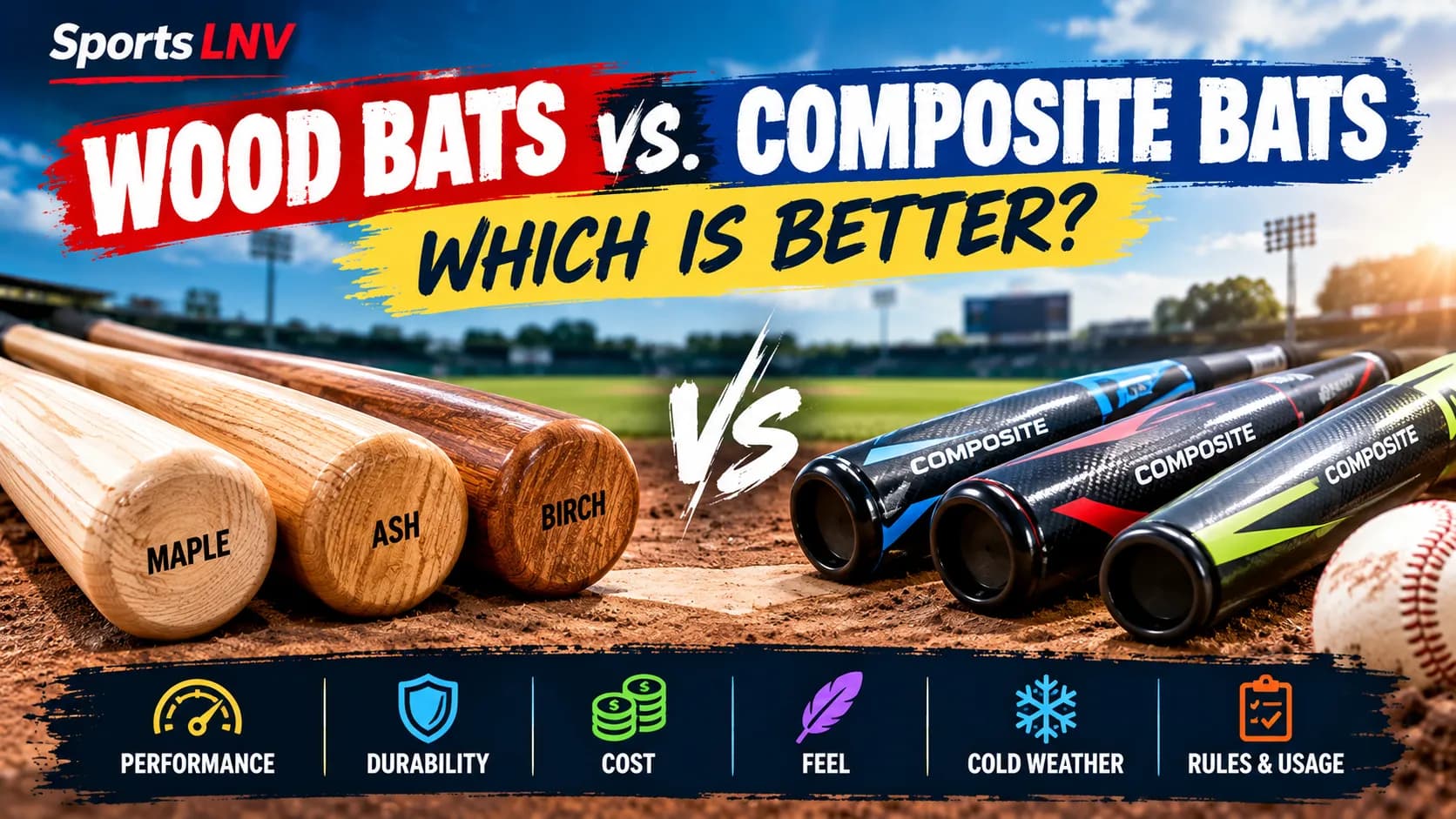
For most young players, alloy or hybrid is the smartest buy. Composite may pay off for serious hitters in warm-weather leagues. Wood belongs in every hitter's bag, at least for practice.
| Feature | Alloy (Aluminum) | Composite | Hybrid | Wood |
|---|---|---|---|---|
| Ready to use | Right away | After a break-in period | Right away | Right away |
| Cold weather (below about 60°F) | Fine | Can crack | Fine with an alloy barrel | Can break on a jam shot |
| Sting on mishits | Most | Least | Low | High |
| How it usually fails | Dents | Cracks | Dents at the barrel | Breaks or flakes |
| Best for | Budget buyers, cold-weather leagues, younger kids | Committed hitters, warm climates | Many recreational and travel players | Practice, wood-bat leagues, older players |
Alloy (Aluminum)
Alloy bats are made from a single tube of aluminum. They're hot out of the wrapper, take a beating, and usually dent rather than crack. That makes them easy to judge, since a dented bat is visibly damaged. The tradeoff is sting. Hit one off the handle on a cold April night and your hands will let you know.
Composite
Composite bats use layered carbon fiber. You get a lighter swing weight, a bigger sweet spot once the bat is broken in, and much less vibration. The downside is fragility. Composite barrels can crack in the cold, and many manufacturers recommend switching to alloy in cold weather. See Bat Digest's bat comparison for information on composite-bat performance and handling.
Composite bats may also require a break-in period. Follow the manufacturer's instructions, including the recommended number of hits, the ball type, and how to rotate the bat.
Hybrid
Hybrid bats pair an alloy barrel with a composite handle. You get alloy's durability and day-one performance with some of composite's vibration-control benefits. For a kid playing 40 or 50 games a year in Ohio or New Jersey, where spring nights get cold, a hybrid is often the sweet spot.
Wood
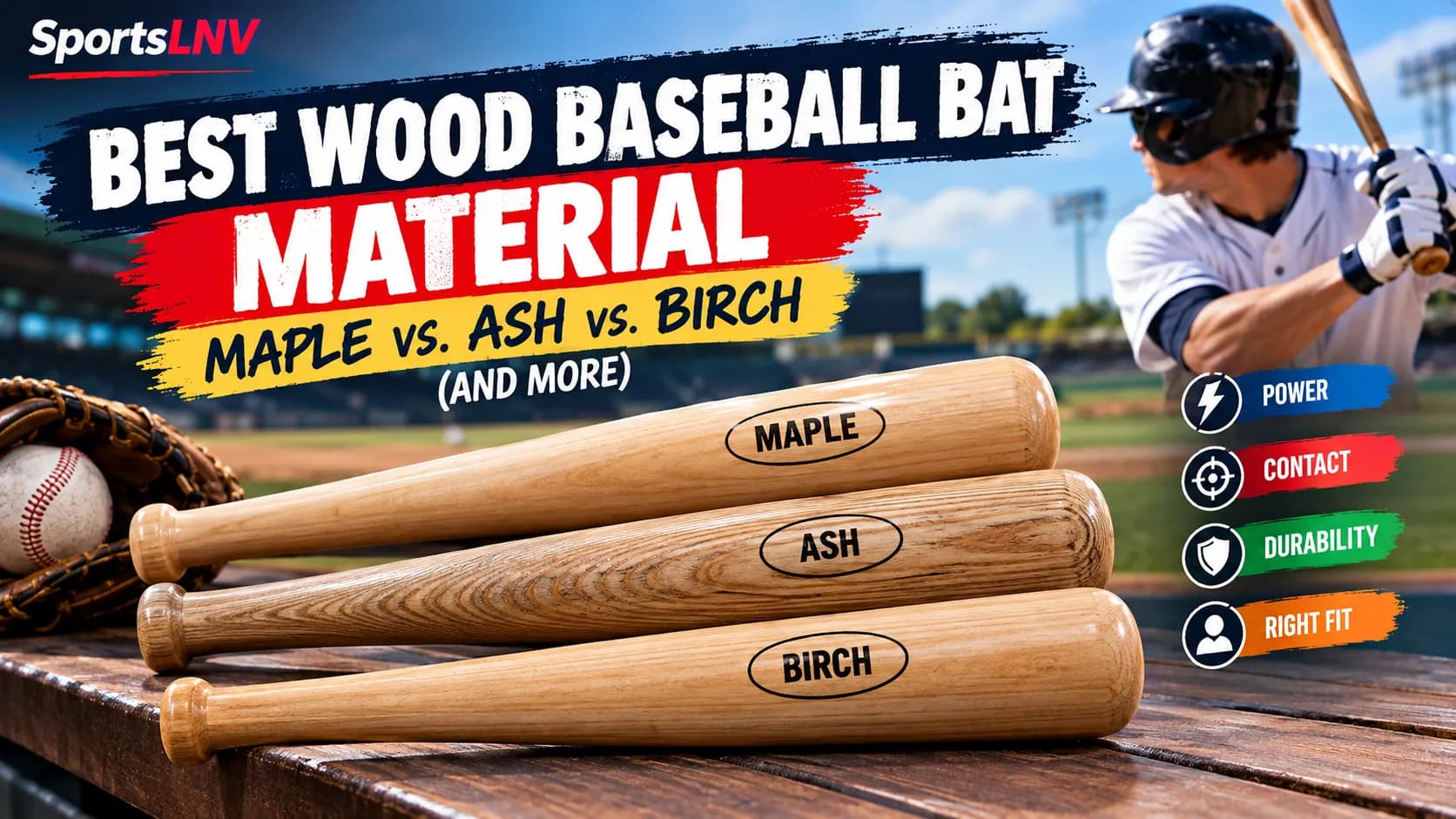
Wood is the purest teacher in the game. Hit it off the end or in on the hands and you'll know right away, because the bat tells you. Maple is the hardest and most popular. Ash flexes more and forgives a little. Birch falls in between.
For a detailed comparison, read our guide to the best wood baseball bat material, where we compare maple, ash, birch, and other bat woods.
Even if your kid swings metal on Saturdays, a wood bat in the cage can help build a better swing. Players who square up wood consistently may find it easier to make clean contact when they return to metal.
Step 5: Match the Construction to the Hitter
Once the stamp, size, and material are settled, construction is where you fine-tune the bat to your kid's swing. This is the stuff the guy at the store loves to talk about. It matters, but less than the first four steps.
One-Piece vs. Two-Piece
One-piece bats are a single continuous unit. They're stiff, so there's very little flex and very little energy lost at contact. Strong hitters who square the ball up like that firm, wood-like feedback. The catch is that a mishit stings.
Two-piece bats join the barrel and handle at a connection point. That joint soaks up vibration and adds a little whip through the zone. Many developing hitters, and anyone who hates getting jammed, may be happier with a two-piece model.
If you're not sure, consider a two-piece bat for a child under 13. Comfort can help keep them swinging, and a kid who's afraid of the sting may start bailing out on inside pitches.
Balanced vs. End-Loaded
Two bats can both weigh 20 ounces and still feel completely different. It depends on where the weight sits.
Balanced bats spread the weight more evenly. They tend to swing quicker, making them a common choice for contact hitters and younger players.
End-loaded bats put extra mass toward the end of the barrel. They feel heavier and can suit a strong hitter with good bat speed. Give one to a kid who isn't ready and the barrel may drag.
Barrel Diameter
Big barrels get the attention, but a bigger barrel isn't automatically better. Little League rules permit barrels up to 2-5/8 inches in its baseball divisions. Some USSSA bats go to 2-3/4 inches, which won't fit through a Little League bat ring. A larger barrel gives a bigger hitting surface but adds weight out front. For 7- and 8-year-olds, a 2-1/4-inch barrel may be easier to handle.
Check the current league rules and bat specifications before buying. Barrel limits can differ by governing body, division, and competition.
Handle and Grip
It's an easy detail to miss. A thinner handle helps small hands wrap the bat properly, and a tacky grip helps a kid who sweats through batting gloves in July. Little League restricts certain add-ons, including choke-up rings and batting donuts, so pick a bat that feels right as it comes from the store. Check the current Little League bat rules before modifying a bat.
Step 6: Set a Budget That Makes Sense
You don't need the $400 flagship for a 9-year-old who's going to outgrow it by next spring. Spend more as the player gets older, more committed, and closer to the bat they'll keep for a few seasons.
| Level | Typical Price Range | Where I'd Land |
|---|---|---|
| Tee ball | About $25 and up | Cheapest legal bat that fits; they'll outgrow it in a year |
| Youth (USA or USSSA, roughly ages 7–12) | $80–$300 | $100–$175 for recreational ball; more only for serious travel players |
| BBCOR (high school and college) | $300–$500 | Last year's model or a solid alloy for a freshman |
| Wood | $50–$300 | A $60–$100 maple or birch bat can handle practice just fine |
Price ranges are based on the supplied 2026 bat pricing information. Actual prices depend on brand, model, certification, retailer, and availability.
How to Save Without Getting Burned
- Buy last year's model: Bat companies release new paint and designs regularly, and the technology may change very little between some model years. Prior-year bats can be discounted significantly.
- Buy used carefully: Check that the certification stamp is clear and readable, because Little League says a bat with an unreadable mark cannot be used. Look for dents, cracks, or a rattle. Check the model against the USA Baseball bat information and decertification guidance.
- Never buy a "hot" bat: A rolled or shaved bat that's been altered to boost performance is illegal under applicable rules and can be dangerous. If a used listing brags that a bat "has been broken in for you" or hits "way hotter than stock," walk away.
- Know the warranty: Many bats carry a limited warranty for manufacturing defects, but terms differ. It usually won't cover every type of damage, including damage caused by improper temperatures or using the wrong balls. Keep the receipt and register the bat if the manufacturer requires it.
If money's tight, here's my honest advice: a properly sized $70 alloy bat beats a $350 composite that's an inch too long, every time.
Common Mistakes and How to Make a Bat Last
Most bad bat decisions fall into a handful of patterns. I see the same ones every season.
Mistakes to Avoid
- Buying a bat to grow into: It feels thrifty, but a bat that's too long or too heavy can disrupt the swing. The kid drops the back shoulder, casts the hands, and starts pulling off the ball. Buy for this season.
- Copying the best hitter on the team: That kid might be 4 inches taller and 25 pounds heavier. Their bat is sized for them.
- Buying USSSA for Little League: It's a common mistake, and it can make the bat illegal. The bat may be pulled, and the batter can face a penalty under the applicable rules.
- Buying a USSSA -5 for a 13-year-old travel player: With USSSA's 14U national events requiring BBCOR or wood under the supplied 2026 rule details, that bat may only last one season for that player's planned competition. Verify the specific event rules first.
- Ignoring the hitter's feedback: If your kid says the bat feels heavy, believe them. Watch them swing and size down if needed.
Care Tips That Actually Extend Bat Life
- Keep composites out of the cold: Follow the manufacturer's minimum temperature guidance. Under some conditions, switching to alloy or wood may help avoid damaging a composite bat.
- Use appropriate baseballs: Heavy, dense cage balls and rubber batting-cage balls may damage some composite barrels and can void warranties. Ask the facility what balls they use before bringing an expensive bat.
- Rotate the bat: Turn it a quarter turn every few swings, following manufacturer guidance, so wear is distributed more evenly around the barrel.
- Don't leave it in a hot or freezing car: Large temperature swings can be hard on composite materials.
- Don't share it with the whole team: Repeated use by players with different swing mechanics increases the number of impacts the bat takes. Follow the manufacturer's recommendations for use and inspection.
- Replace the grip when it gets slick: A fresh grip can improve comfort and handling without the cost of upgrading the entire bat.
Baseball Bat FAQs
What Size Bat Should a 10-Year-Old Use?
Many 10-year-olds use a 28- or 29-inch bat in a -10 or -11 drop. Height and weight matter more than age, so run the chest test and the hold-out test before you buy. The bat must also comply with the player's league rules.
Can You Use a USSSA Bat in Little League?
No. Little League requires the USA Baseball stamp for applicable non-wood bats through the Majors division and bans bats marked BPF 1.15. A USA Baseball-approved bat is also permitted in many USSSA events, but confirm the event's rules.
What's the Difference Between a USA Bat and a USSSA Bat?
A USA Baseball bat is designed to perform closer to wood. A USSSA 1.15 BPF bat has different performance requirements and may produce higher exit velocities. USA Baseball bats are used in leagues such as Little League, while USSSA bats are commonly used in travel ball where permitted.
When Does My Kid Need a BBCOR Bat?
BBCOR requirements depend on the league and age division. High school and NCAA baseball generally use BBCOR bats under their applicable rules. Certain Little League divisions permit BBCOR, and USSSA 14U national events have specific requirements under the supplied 2026 rules. Always verify the applicable regulations before purchasing.
Will High School Players Be Able to Use Lighter Bats?
The supplied source material describes a planned 2028 change allowing certain lighter-drop bats alongside BBCOR. Since this is a future rule change, verify the current NFHS and USA Baseball announcements before relying on it.
Is a Heavier Bat Better?
Only if the hitter can control it. A heavier bat can produce more exit velocity at the same swing speed, but a bat that drags makes the hitter late. A late swing doesn't hit anything hard.
Are Composite Bats Better Than Aluminum?
Not automatically. Composite bats can offer less sting and a larger effective hitting area once they're broken in. Alloy bats are usually cheaper, ready to use immediately, and may be more suitable in cold weather. For many youth players, a good alloy or hybrid bat can be better value.
How Long Does a Baseball Bat Last?
An alloy bat may last two or more seasons for a youth player. A composite may last a season or two, depending on use, temperature, and maintenance. A child may outgrow a bat before wearing it out, which is another reason not to overspend early.
The Bottom Line
The best baseball bat is a legal one your player can control through the zone, bought at a price you won't regret when they outgrow it next year. Use this checklist when you visit the store:
- Confirm the certification your league requires: USA Baseball, USSSA, BBCOR, or wood.
- Choose the length based on height and weight, and consider the shorter bat when between sizes.
- Perform the chest, side, and hold-out tests.
- Choose the drop based on strength and control. Go lighter for a player who struggles to catch up and consider heavier options only when the swing remains controlled.
- Choose a material that suits the climate. Consider alloy or hybrid if spring nights get cold.
- Set a budget for this season, not three seasons from now.
Get those right and the bat stops being an excuse. After that, it's on the hitter, the reps, and a whole lot of tee work in the backyard.