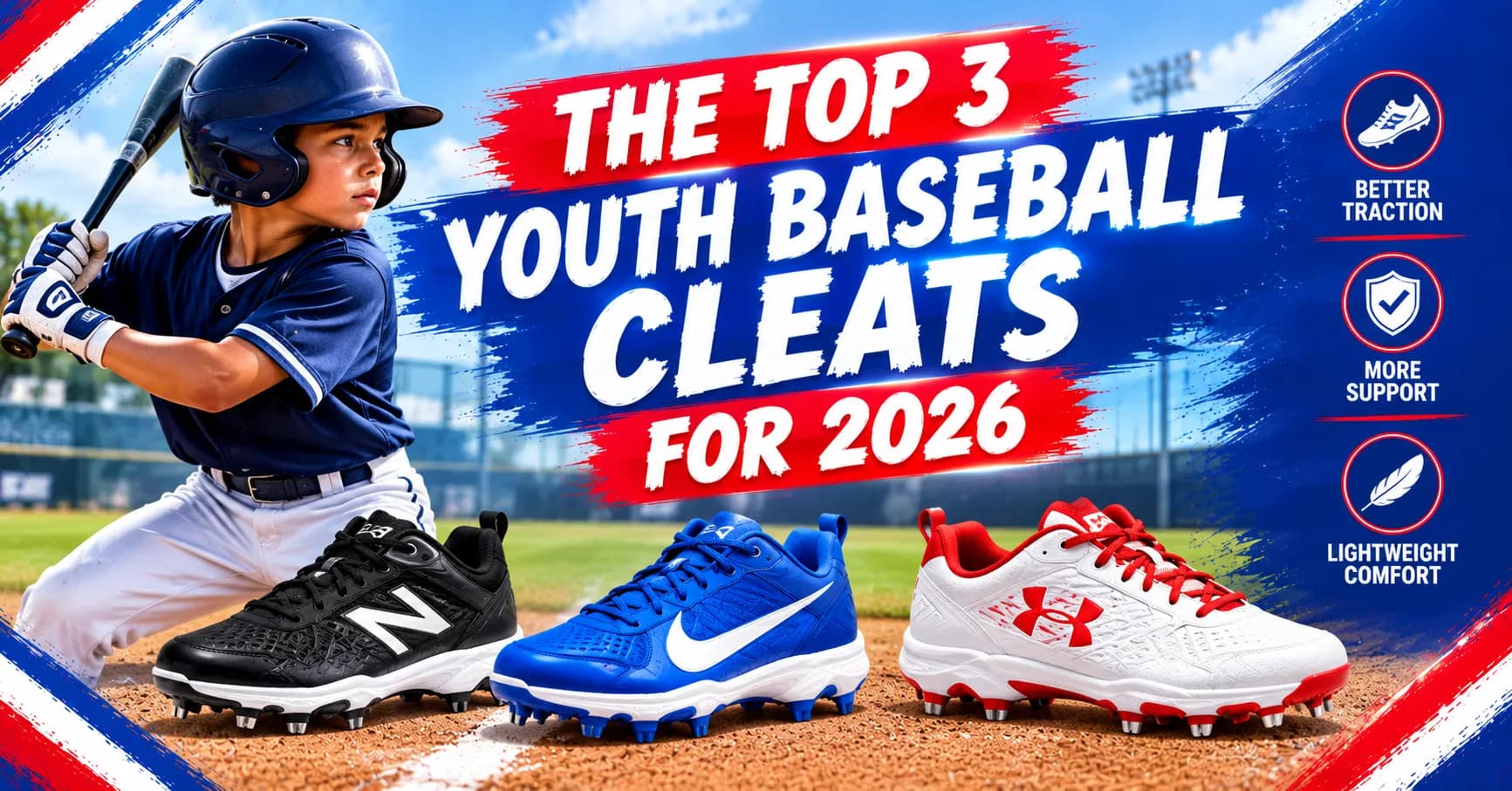
The top three youth baseball cleats right now are the New Balance FuelCell 4040v8 Youth (best overall), the adidas Adizero Impact 2.0 Youth (best lightweight cleat for speed), and the Nike Force Zoom Trout 9 Keystone (best budget pick). All three are molded rubber cleats, which makes them suitable for many youth baseball leagues.
Kids' cleats can be a difficult purchase. They're usually outgrown in a single season, so there may be little reason to spend $120 on a pair. But a cheap, stiff, poorly fitting cleat can lead to blisters, slips on the base paths, and a child who doesn't enjoy going to practice.
These three picks focus on what matters at this age: comfort, traction, durability for one season, and a price that won't sting when your child needs a new size in June.
The Top 3 Youth Baseball Cleats at a Glance
| Feature | New Balance FuelCell 4040v8 Youth | adidas Adizero Impact 2.0 Youth | Nike Force Zoom Trout 9 Keystone |
|---|---|---|---|
| Best for | Best overall | Speed and lightweight feel | Budget buyers |
| Cleat type | Molded rubber | Molded rubber | Molded rubber |
| Cushioning | Full-length FuelCell foam | Supportive midsole | Full-length foam |
| Weight | 8.5 oz (240 g) | Not listed | Not listed |
| Widths | Standard and wide | Regular | Regular |
| Typical price | About $50 | About $35–$45 | About $30–$40 |
| Little League eligibility | Check applicable division rules | Check applicable division rules | Check applicable division rules |
Specifications and prices in this comparison are based on the supplied product information and may change by retailer, color, and size. Check the current listings from New Balance, Better Baseball, and Baseball Monkey before purchasing.
1. New Balance FuelCell 4040v8 Youth: Best Overall
If you want one versatile youth cleat, the New Balance FuelCell 4040v8 Youth is a strong option. The youth version combines a supportive design with FuelCell foam cushioning intended to provide a comfortable feel on the field.
What Stands Out
- Full-length FuelCell midsole: New Balance uses lightweight foam along the length of the shoe. This can help provide cushioning for children who spend long periods on hard infield surfaces. See the official product listing.
- Wide sizes: Standard and wide options can make this model a good choice for children whose feet feel cramped in regular-width cleats.
- Lightweight construction: The listed weight is approximately 8.5 ounces, or 240 grams.
- All-surface outsole: The molded outsole is designed for baseball surfaces such as dirt and grass. Check suitability for your team's specific field.
- Easy-to-clean upper: The synthetic upper can be wiped clean after muddy practices and games.
What to Watch For
- It costs more than the other two options, at approximately $50.
- Popular colors and sizes can sell out during spring baseball season.
- Pitchers who drag their back toe may wear through the toe area faster. Check whether a compatible toe guard is recommended by the manufacturer.
Who should buy it: Youth players who participate in a full spring and summer schedule, especially children who need a wide fit.
2. adidas Adizero Impact 2.0 Youth: Best for Speed
The adidas Adizero Impact 2.0 Youth is designed for players who prefer a lightweight, low-profile feel. It can be a suitable choice for young athletes who run the bases aggressively or spend much of their time in the outfield.
What Stands Out
- Light, low-to-the-ground feel: The design is intended to feel streamlined for players who value quick movement.
- Simple construction: The shoe features a synthetic upper, textile lining, and a rubber outsole with molded studs. See the product listing at Better Baseball.
- Multiple color options: Colorways can include team colors and themed designs, depending on availability.
- Competitive price: The typical price in the supplied comparison is about $35 to $45.
What to Watch For
- The listed fit is regular width, so children who need a wide shoe should compare alternatives.
- Special editions and popular colors may cost more or sell out.
- The cushioning may feel less plush than the FuelCell foam in the New Balance model.
Who should buy it: Youth players who prefer a lightweight cleat and have narrow or average-width feet, particularly outfielders and middle infielders.
3. Nike Force Zoom Trout 9 Keystone: Best Budget Pick
The Nike Force Zoom Trout 9 Keystone is a budget-friendly option for families buying cleats for a first-year player or a child who is growing quickly and may need a different size before the season ends.
What Stands Out
- Affordable price: The supplied comparison lists a typical price of about $30 to $40. Some sizes and colors may be discounted. See the Nike Force Zoom Trout 9 Keystone listing at Baseball Monkey.
- Reinforced toe: A toe overlay is designed to help protect an area that often experiences scuffing.
- Full-length foam: The cushioning is intended to provide comfort during games and practices.
- Molded rubber outsole: The outsole uses molded studs rather than traditional metal spikes.
What to Watch For
- The cushioning is relatively basic compared with more premium models.
- The regular-width fit may feel snug for children with wider feet.
- Like other youth cleats, the shoe may need replacing as the player's feet grow or the outsole wears down.
Who should buy it: First-year players, recreational league participants, and families looking for a reasonably priced cleat for the season.
Molded vs. Metal vs. Turf: What Youth Players Need
For many youth players, molded cleats are a practical starting point. They are widely available and can be used on many dirt and grass baseball fields. However, permitted footwear depends on the league, age division, and playing surface.
| Cleat Type | What It Is | Best For | Important Consideration |
|---|---|---|---|
| Molded rubber or TPU | Studs formed into the outsole | Many youth baseball players | Check league rules and field requirements. |
| Metal spikes | Thin metal spikes attached to the sole | Eligible older players on suitable fields | Not permitted in Little League Majors and below. |
| Turf shoes | Small rubber nubs rather than traditional spikes | Artificial turf, indoor practice, and training | Traction may not be suitable for every grass or dirt field. |
League Rules on Metal Spikes
Little League's footwear rules restrict metal spikes in the Majors division and below. Metal spikes are allowed in the Intermediate (50/70), Junior, and Senior League divisions under the applicable rules. Check the current requirements in the official Little League guidance on metal spikes.
Travel baseball and high school rules may differ. Before purchasing metal cleats, confirm the rules with your coach or league administrator.
What About Turf Shoes?
Turf shoes can be a useful second purchase for children who regularly practice on artificial turf or in indoor facilities. Some coaches also prefer them for winter workouts.
Turf shoes are not a universal replacement for baseball cleats. The right choice depends on the field surface, the player's activities, and the rules of the facility.
How to Fit Youth Cleats and When to Replace Them
Even a well-designed cleat can cause discomfort if it is the wrong size. Use these steps to help find a suitable fit for your child.
- Shop in the afternoon: Feet can swell during the day, so trying shoes on later may help you assess comfort.
- Bring baseball socks: Have your child try the cleats with the same socks worn during games and practices.
- Leave room at the toes: Aim for approximately half an inch of space between the longest toe and the front of the shoe, while ensuring the foot does not slide excessively.
- Check the heel: Ask your child to jog, stop, and change direction. The heel should remain secure without excessive slipping.
- Check the width: If the sides of the foot press against the shoe or the child reports pressure near the little toe, try a different width or model.
Don't Buy Cleats That Are Too Big
It can be tempting to buy a larger size so the cleats last longer. However, shoes that are too large can allow the foot to move around, increasing discomfort and reducing stability.
A little growing room is reasonable, but the cleats should fit securely from the beginning. Have your child try them on and walk, jog, and stop before making a purchase.
When to Replace Youth Cleats
Inspect the cleats regularly and consider replacing them when:
- The toes press against the front of the shoe.
- The studs are significantly worn and traction has decreased.
- The sole is separating from the upper.
- The toe area has worn through, which can happen to pitchers who drag their back foot.
- The shoes no longer fit comfortably or securely.
Some growing children need a new pair each spring, while others may need replacements more frequently depending on their growth and playing schedule.
Youth Baseball Cleats FAQs
What Are the Best Youth Baseball Cleats?
Our three picks are the New Balance FuelCell 4040v8 Youth for the best all-around option, the adidas Adizero Impact 2.0 Youth for players who prefer a lightweight feel, and the Nike Force Zoom Trout 9 Keystone for budget-conscious families.
Can Kids Wear Metal Cleats in Little League?
Metal spikes are not permitted in Little League Majors and below. They are permitted in the Intermediate (50/70), Junior, and Senior divisions under the applicable rules. Check the latest league requirements before buying.
Can You Wear Soccer Cleats for Baseball?
Soccer cleats may work in limited situations, but baseball cleats are generally preferable for baseball. Soccer footwear has a different stud layout and typically lacks the toe stud found on many baseball cleats. Choose footwear suited to the sport and your league's rules.
How Much Should Youth Baseball Cleats Cost?
Based on the supplied product comparison, many youth molded cleats fall in the $30 to $50 range. Prices vary by brand, size, retailer, and sale availability.
What's the Difference Between Molded Rubber and TPU Cleats?
Rubber and TPU are materials used in molded outsoles. Rubber studs tend to be softer, while TPU is a harder plastic that may offer a lighter construction and different durability characteristics. The feel and traction depend on the specific shoe design and field surface.
How Should Youth Baseball Cleats Fit?
Cleats should fit securely around the heel and midfoot, with some room in front of the longest toe. Try them on with game socks and check for pressure points, heel movement, and comfort while jogging and stopping.
Do Kids Need Different Cleats for Turf?
Turf shoes may be more comfortable for indoor training and some artificial surfaces. Molded cleats can be suitable for many other fields, but always follow the facility's footwear rules and select shoes appropriate for the playing surface.
The Bottom Line
For many youth players, the New Balance FuelCell 4040v8 Youth is the strongest all-around option in this comparison. It offers cushioning and wide-width availability at a typical price of around $50.
The adidas Adizero Impact 2.0 Youth is worth considering for players who prefer a lightweight feel, while the Nike Force Zoom Trout 9 Keystone is a practical budget choice for first-year players and growing children.
Whichever model you choose, make sure it fits properly and complies with your league's footwear rules. Buy for the player's current needs, leave appropriate room at the toes, and inspect the cleats regularly for wear.