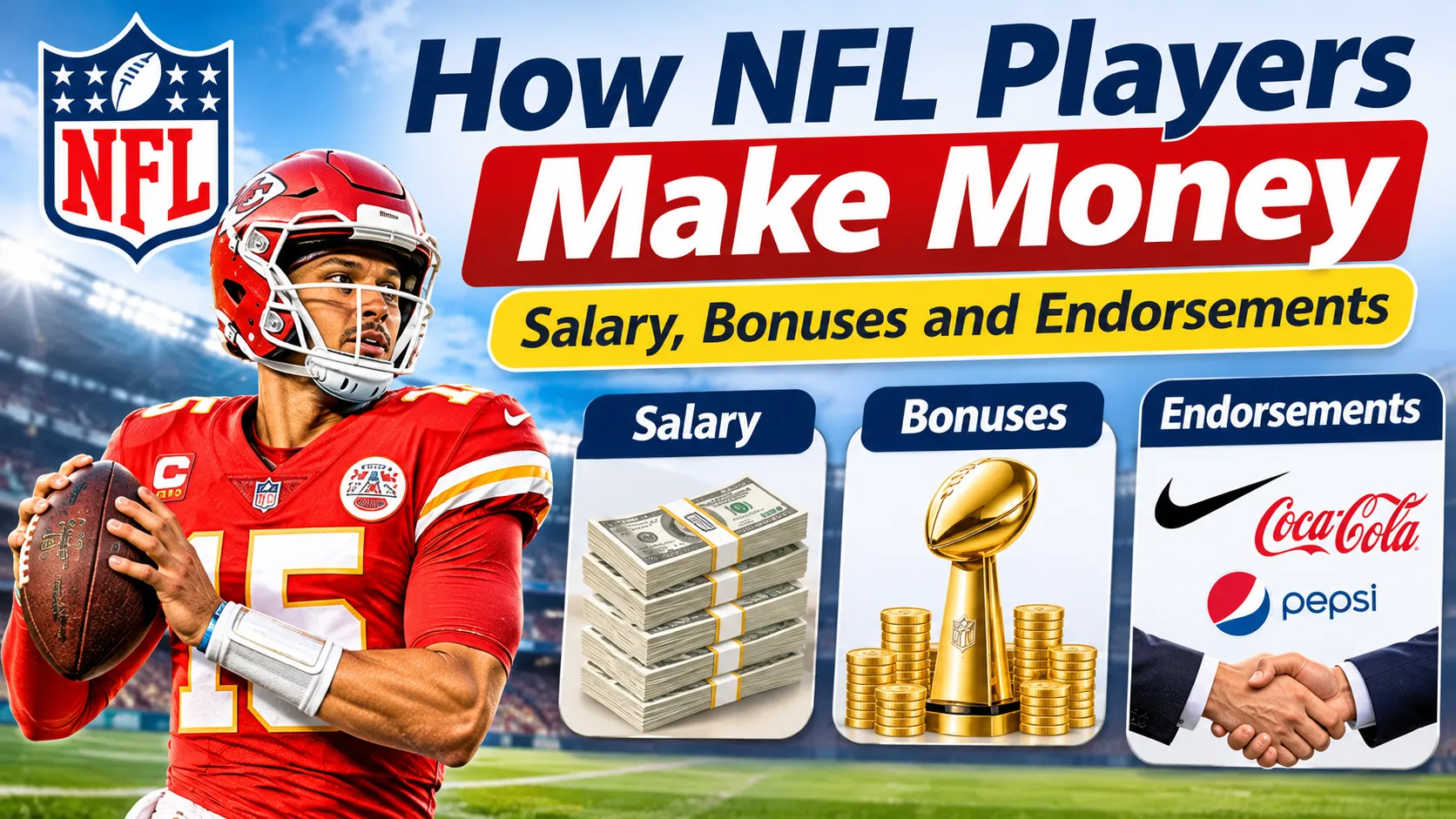
Professional NFL players earn money through several income sources, including team salaries, signing bonuses, performance incentives, endorsement deals, sponsorships, and business opportunities. How NFL Players Make Money: Salary, Bonuses and Endorsements is an interesting topic for football fans who want to understand how professional athletes build their wealth. While some players earn millions through long-term contracts, others increase their income through brand partnerships, advertising campaigns, merchandise, and personal business ventures. The amount an NFL player earns depends on experience, playing performance, contract negotiations, market value, and popularity.
The National Football League (NFL) offers some of the most competitive salaries in professional sports. However, a player's total earnings are not limited to their regular-season salary. Different bonuses, guaranteed payments, sponsorship agreements, and additional opportunities can significantly increase their overall income.
1. NFL Player Salaries: How Much Do Professional Football Players Earn?
NFL players receive salaries through contracts negotiated with their respective teams. These contracts determine their base salary, guaranteed money, bonuses, incentives, and other financial benefits. A player's salary generally depends on their position, experience, performance, and importance to the team.
Quarterbacks often receive some of the largest contracts because they play a central role in offensive performance and team success. However, elite defensive players, wide receivers, offensive linemen, and other positions can also secure substantial contracts.
Several factors influence NFL player salaries:
- Playing position: Certain positions, particularly quarterbacks, often command higher salaries because of their impact on team performance.
- Experience: Established veterans may negotiate more valuable contracts based on their professional achievements.
- Performance: Consistent performances, statistics, awards, and leadership can improve a player's market value.
- Team requirements: Teams may offer competitive contracts to retain important players or strengthen specific positions.
- Market conditions: Salary cap changes and competition between teams influence contract negotiations.
Base salary is generally paid throughout the regular season according to the terms of the player's contract. In a standard 17-game regular season, a player's game check is generally calculated as one-eighteenth of their base salary.
However, the advertised value of an NFL contract does not always represent the amount of money a player is guaranteed to receive. Understanding contract structure is important when comparing player earnings.
2. Signing Bonuses: How NFL Players Receive Money When Signing Contracts
Signing bonuses are one of the most important components of NFL contracts. Teams offer these payments to players when they sign new agreements, extensions, or other qualifying contract arrangements.
Unlike regular base salary payments, a signing bonus provides compensation associated with signing the contract. These bonuses can be particularly valuable for players negotiating long-term agreements because they provide substantial upfront earnings.
For example, if a player signs a contract with a $20 million signing bonus, that amount represents additional contractual compensation rather than their annual base salary.
Signing bonuses also have an important role in NFL salary cap management. Teams can generally distribute the salary cap accounting of a signing bonus over the contract term, subject to a maximum five-season period under NFL rules.
Some important benefits of signing bonuses include:
- Provide players with substantial upfront compensation.
- Increase the total financial value of a contract.
- Help teams structure contracts around salary cap requirements.
- Can strengthen negotiations between players and organizations.
However, players should understand the difference between money received and money guaranteed under a contract. The financial protection of guaranteed compensation depends on the specific terms negotiated.
3. Performance Bonuses and Other Financial Incentives
Performance bonuses allow NFL players to earn additional compensation by meeting specific individual or team-related targets. These incentives encourage players to maintain strong performances throughout the season.
Depending on the contract, incentives may be connected to playing time, statistical achievements, awards, or team accomplishments.
Common NFL performance incentives include:
- Passing incentives: Quarterbacks may receive additional payments for reaching passing yardage or touchdown targets.
- Rushing incentives: Running backs can earn bonuses by achieving specific rushing yardage or touchdown milestones.
- Receiving incentives: Wide receivers and tight ends may receive additional compensation for reaching reception, receiving yardage, or touchdown targets.
- Defensive incentives: Defensive players may have bonuses linked to sacks, interceptions, tackles, or other performance achievements.
- Award incentives: Certain contracts include additional compensation for earning individual awards or receiving specific recognition.
- Team performance incentives: Some agreements include bonuses connected to playoff qualification, championships, or other team achievements.
NFL contracts can also include workout bonuses, roster bonuses, and per-game active roster bonuses. These payments are subject to specific contractual requirements.
Another important distinction is between likely-to-be-earned (LTBE) and not-likely-to-be-earned (NLTBE) incentives. NFL salary cap accounting generally classifies these incentives based on previous-season performance and applicable contract rules.
These financial incentives allow players to increase their contractual earnings while giving teams flexibility when negotiating compensation.
4. Guaranteed Money: Understanding NFL Contract Security
Guaranteed money is one of the most important financial aspects of professional football contracts. It represents compensation that a player is entitled to receive when the applicable contractual guarantee conditions are satisfied.
However, not every dollar mentioned in an NFL contract is fully guaranteed. Some agreements include partial guarantees that protect players against specific circumstances.
NFL contracts generally recognise three major types of guarantees:
- Skill guarantee: Protects qualifying compensation if a team releases a player because of concerns about their playing ability.
- Cap guarantee: Protects qualifying compensation if a team terminates a contract for salary cap-related reasons.
- Injury guarantee: Protects qualifying compensation when a player cannot perform football duties because of a covered injury.
When compensation is protected against all three categories, it is considered fully guaranteed at signing. Other arrangements may provide protection against only one or two categories.
Understanding guaranteed money helps fans compare contracts more accurately. A player with a large advertised contract may have less guaranteed compensation than another player with a smaller overall agreement.
5. NFL Contract Negotiations and the Salary Cap
NFL teams operate under a salary cap system that limits the amount of money they can allocate to player contracts. This system makes contract negotiations an important part of team management.
Teams must balance player salaries, bonuses, roster requirements, and future financial commitments while remaining within league rules.
Contract structures can include several financial components:
- Base salary.
- Signing bonus.
- Roster bonus.
- Workout bonus.
- Option bonus.
- Performance incentives.
- Guaranteed compensation.
Teams may also restructure existing contracts to create salary cap flexibility. For example, converting part of a player's base salary into a signing bonus can reduce the immediate salary cap charge while distributing the accounting impact across future seasons.
However, restructuring contracts can create additional financial obligations in later years. This is why NFL organizations carefully evaluate both current and future salary cap commitments.
For fans interested in understanding these financial agreements, our NFL Contract Tracker provides a useful resource for exploring player salaries, bonuses, contract developments, and major NFL deals.
6. Endorsements and Sponsorships: How NFL Players Earn Money Outside Football
Endorsements are another major source of income for popular NFL players. Companies partner with professional athletes to promote their products, services, and brands through advertising campaigns, social media, television commercials, and public appearances.
Players with strong public recognition, successful careers, and large fan followings can attract valuable sponsorship opportunities.
Common endorsement categories include:
- Sportswear brands: Athletes promote footwear, jerseys, training apparel, and sports accessories.
- Food and beverage companies: Players appear in advertisements and promotional campaigns for consumer products.
- Automotive brands: Popular athletes may participate in vehicle advertisements and brand partnerships.
- Technology companies: Players promote smartphones, gaming products, electronics, and digital services.
- Fitness and lifestyle brands: Athletes collaborate with companies selling fitness equipment, wellness products, and lifestyle merchandise.
- Financial services: Some players work with financial institutions and other businesses through advertising partnerships.
Endorsement income varies significantly between players. A superstar quarterback with a large national following may attract more lucrative partnerships than a less recognisable player.
Social media has also changed how professional athletes work with brands. Players can use platforms such as Instagram, YouTube, and other digital channels to reach audiences directly and promote sponsored products.
7. Social Media, Personal Branding, and Business Opportunities
Modern NFL players have opportunities to build personal brands beyond their performances on the football field. Social media platforms allow athletes to connect with fans, share their lifestyles, promote products, and develop business relationships.
A strong personal brand can create additional earning opportunities through:
- Sponsored social media posts.
- Paid promotional campaigns.
- Personal merchandise and clothing brands.
- Public appearances and speaking engagements.
- Podcasting and digital media projects.
- Business partnerships and entrepreneurial ventures.
Some players also invest in restaurants, technology companies, fitness businesses, real estate, and other commercial opportunities.
These activities can provide additional income beyond their playing contracts. However, business success depends on investment decisions, market conditions, and long-term management rather than athletic popularity alone.
8. How NFL Player Performance Influences Their Earning Potential
On-field performance plays a major role in determining a player's professional value. Strong performances can improve contract negotiations, attract sponsorship opportunities, and increase public recognition.
Quarterbacks are often evaluated through passing yards, completion percentages, touchdowns, interceptions, and overall offensive performance. Running backs are assessed through rushing attempts, rushing yards, touchdowns, and receiving contributions.
Wide receivers and tight ends are commonly evaluated through receptions, receiving yards, touchdowns, and consistency. Defensive players are assessed through statistics such as sacks, tackles, interceptions, and forced fumbles.
These statistics also influence how fans evaluate players in fantasy football competitions. Understanding player performance can make it easier to follow the relationship between individual achievements and professional recognition.
Explore our NFL Fantasy Football Rankings to learn more about player performances, rankings, and fantasy football value.
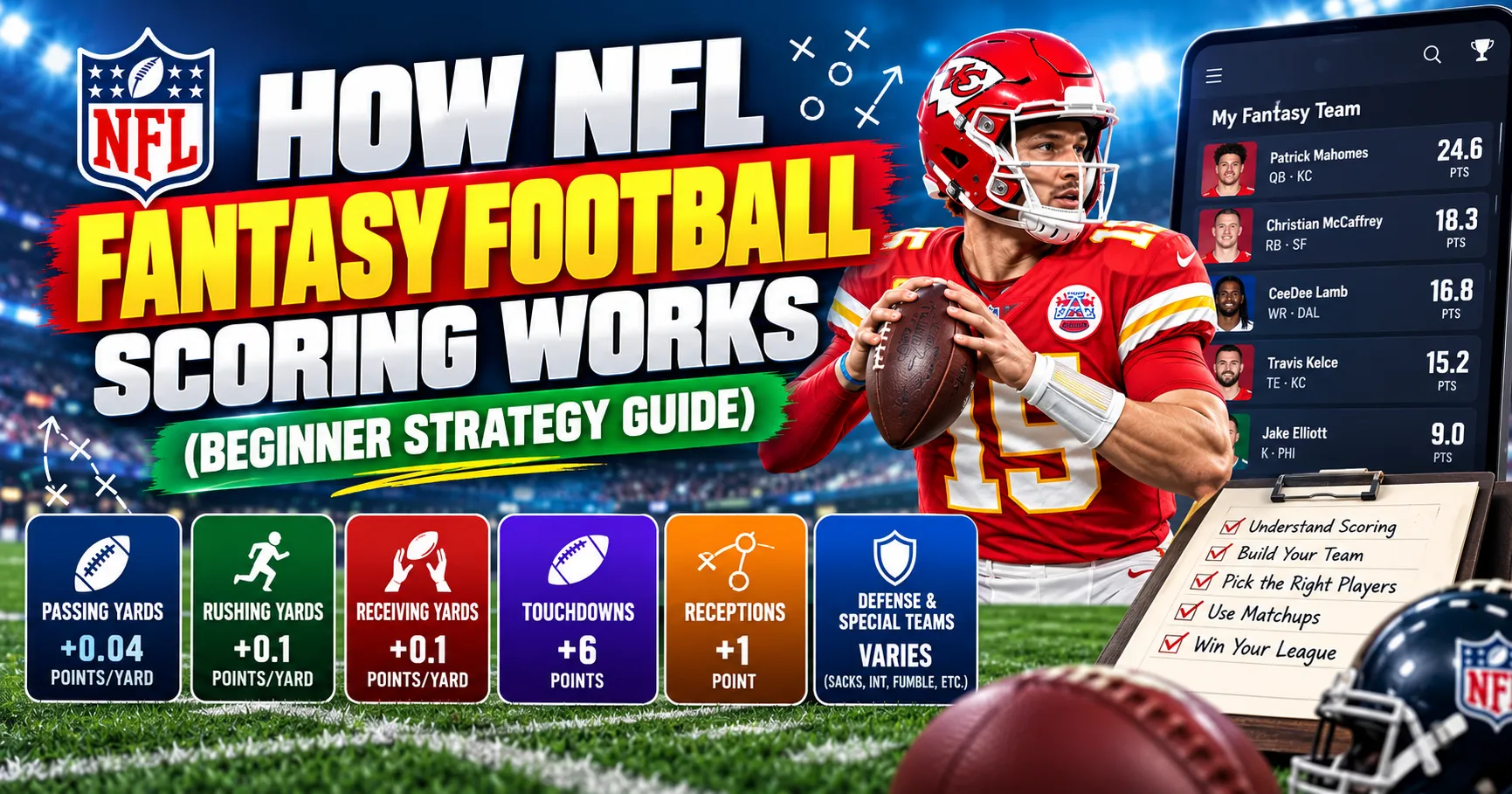
For beginners who want to understand how player statistics translate into fantasy points, our guide on How NFL Fantasy Football Scoring Works explains the scoring system and important performance categories.
Although fantasy football rankings do not determine actual NFL salaries, they provide another way for fans to analyse player performance and compare individual contributions.
9. How Television Coverage and NFL Popularity Create More Earning Opportunities
The NFL has a massive audience across television, streaming platforms, and digital media. This popularity creates commercial opportunities for teams, sponsors, broadcasters, and individual players.
Greater visibility can help established players attract endorsement deals and expand their personal brands. Major games, playoff appearances, and championship events can also increase a player's public recognition.
Streaming services have changed how fans watch professional football. Supporters can follow games through compatible smart TVs, streaming devices, computers, and mobile applications, depending on broadcasting rights and service availability.
For fans who want to follow their favourite teams and players, explore our guide to Best Devices To Stream NFL Games to learn about available streaming equipment and viewing options.
As the NFL continues to expand its digital audience, players have more opportunities to build relationships with fans and increase their commercial visibility.
10. Do All NFL Players Earn Millions of Dollars?
No. Although the NFL features some of the highest-paid athletes in professional sports, not every player earns millions of dollars in salary or endorsements.
Player earnings vary based on experience, contract terms, roster status, position, and career performance. Established starters and superstar players generally secure more valuable contracts, while rookies, backup players, and practice squad members typically earn less.
Several factors explain the differences in player income:
- Rookie contracts: Newly drafted players generally sign contracts governed by the NFL's rookie compensation system.
- Veteran experience: Experienced players may negotiate higher salaries based on their professional careers.
- Playing time: Players who regularly participate in games may qualify for certain additional compensation programs.
- Injuries: Injuries can affect playing opportunities and future contract negotiations, although contractual guarantees may provide financial protection.
- Marketability: Popular players may receive additional endorsement and sponsorship opportunities.
Some players also earn additional compensation through the NFL's collectively bargained Performance-Based Pay program, which rewards eligible players based on playing time and salary calculations.
This means that NFL player earnings can differ significantly, even among athletes playing for the same team.
11. What Happens to NFL Players' Earnings After Retirement?
Retirement does not necessarily mean that former NFL players stop earning money. Many athletes continue generating income through business investments, media appearances, coaching, broadcasting, and endorsement agreements.
Some retired players become television analysts, sports commentators, podcast hosts, or football coaches. Others develop businesses, invest in real estate, participate in charitable organisations, or work with brands.
Former players with strong public recognition may also receive opportunities for speaking engagements, promotional campaigns, and special events.
Financial planning is particularly important because professional football careers can be relatively short compared with other professions. Managing savings, investments, taxes, and long-term expenses can help athletes maintain financial stability after leaving the game.
Conclusion
NFL players make money through a combination of base salaries, signing bonuses, performance incentives, guaranteed contracts, endorsements, sponsorships, and business opportunities. While professional football contracts provide the foundation of player earnings, commercial partnerships and personal investments can significantly increase an athlete's overall wealth.
The amount a player earns depends on several factors, including position, experience, performance, popularity, contract negotiations, and market demand. Understanding these income sources helps football fans see the financial side of professional sports beyond what happens on the field.
For more NFL updates, player information, contract developments, fantasy football insights, and sports-related guides, explore Sports LNV.
Frequently Asked Questions (FAQs)
1. How do NFL players make money?
NFL players earn money through team salaries, signing bonuses, roster bonuses, performance incentives, guaranteed contracts, endorsements, sponsorships, and business investments. Their total income depends on their contracts, playing performance, experience, and popularity.
2. Do NFL players get paid every week?
NFL players receive compensation according to their contract payment schedules. Base salaries are generally distributed during the regular season through scheduled payments. Signing bonuses and other contractual payments follow their respective payment terms.
3. What is the difference between an NFL salary and a signing bonus?
An NFL salary is the regular compensation a player receives under their contract, while a signing bonus is additional compensation associated with signing an agreement. Signing bonuses are generally paid separately from regular base salary payments and have different salary cap accounting rules.
4. Do NFL players earn money from endorsements?
Yes. NFL players can earn additional income through endorsements, sponsorships, advertising campaigns, social media promotions, and brand partnerships. The amount depends on their popularity, public image, audience reach, and commercial value.
5. Do NFL players continue earning money after retirement?
Yes. Retired NFL players can earn money through investments, businesses, broadcasting, coaching, media appearances, sponsorships, and speaking engagements. Their post-retirement income depends on their financial planning, professional opportunities, and business activities.