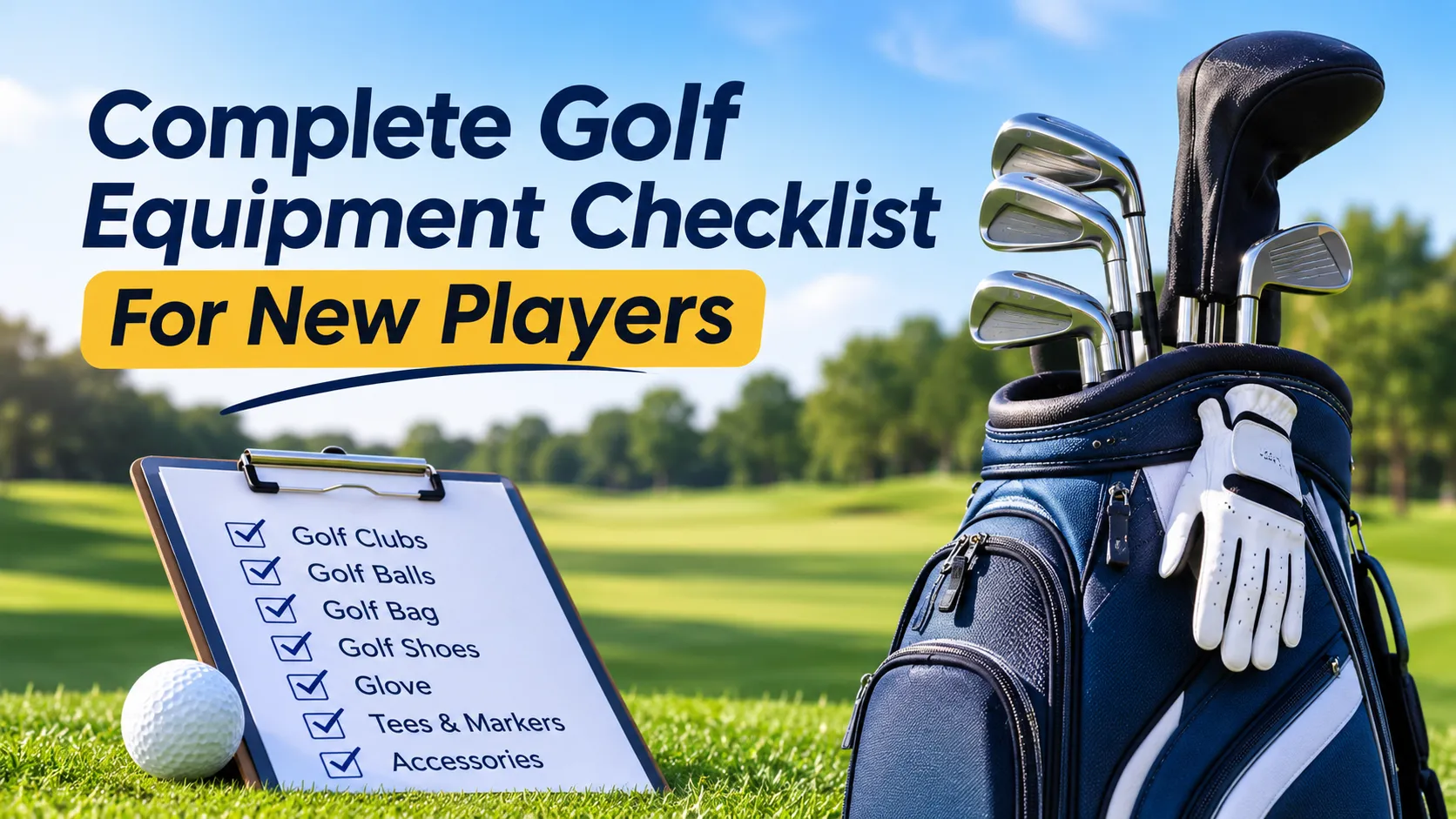
Complete Golf Equipment Checklist For New Players
Starting golf can feel overwhelming without the right gear. This complete golf equipment checklist for new players covers essential clubs, golf balls, tees, gloves, shoes, bags, and accessories to help beginners prepare confidently and enjoy every round on the course. Stay updated on Sports LNV for more updates.
Starting golf is exciting, but choosing the right equipment can feel confusing for new players. From golf clubs and balls to shoes, gloves, tees, and accessories, there are many products available. The good news is that beginners do not need expensive professional equipment or a complete collection of golf accessories to get started.
A complete golf equipment checklist for new players should include a beginner-friendly set of clubs, a suitable golf bag, affordable golf balls, tees, a glove, comfortable shoes, and a few essential accessories. Start with equipment that helps you learn the fundamentals, practise comfortably, and enjoy your first rounds without spending unnecessarily.
This guide explains what golf equipment beginners need, how to choose the right items, and which optional accessories can wait until you gain more experience.
1. Golf Clubs: The Most Important Equipment for Beginners
Golf clubs are the foundation of your equipment. Each club is designed for a different type of shot, including long-distance drives, fairway shots, approach shots, short-game shots, and putting.
New players do not need to carry all 14 clubs permitted under the Rules of Golf. A smaller selection is usually enough while learning how to control distance and improve accuracy.
A beginner-friendly golf club setup can include:
- Driver: Used for long-distance tee shots, particularly on longer holes.
- Fairway wood: Helps cover longer distances from the fairway or tee.
- Hybrid: Combines characteristics of woods and irons, making it useful for players who struggle with long irons.
- Irons: Used for approach shots and different distances. A 7-iron, 8-iron, and 9-iron are useful starting options.
- Pitching wedge: Helps with shorter approach shots and controlled shots around the green.
- Sand wedge: Designed for bunker shots and higher short-game shots.
- Putter: Used to roll the ball into the hole on the putting green.
A starter set containing these basic club types can make equipment selection easier. You can add more clubs as your swing becomes consistent and you understand which distances you need to cover.
2. Golf Driver: Choose Forgiveness Over Distance
The driver is one of the most recognisable golf clubs. It is generally used for the first shot on longer holes, where players want to cover as much distance as possible.
For beginners, forgiveness should be more important than professional-level performance. A forgiving driver can make off-centre contact more manageable and help new players develop confidence.
Consider these features when selecting a beginner driver:
- Higher loft: A higher-lofted driver can help many beginners launch the ball more easily.
- Large clubhead: A larger hitting area can make the club more forgiving.
- Suitable shaft flex: The shaft should match your swing speed and playing ability.
- Comfortable weight: Choose a club that you can swing naturally without struggling to control it.
- Adjustability: Some drivers offer adjustable settings that can help customise launch and ball flight.
Choosing the right driver can make learning golf more enjoyable. Before purchasing, compare the best golf drivers for beginners in 2026 and consider their forgiveness, loft, shaft options, and overall suitability for your swing.
If you are still unsure which model to choose, our guide to beginner-friendly golf drivers can help you understand the features that matter most before investing in your first driver.
3. Golf Balls: Select the Right Ball for Your Skill Level
Golf balls may look similar, but their construction, compression, feel, and performance can differ. Beginners should choose a ball that suits their current abilities rather than automatically purchasing expensive professional or tour-level models.
A suitable beginner golf ball should offer a comfortable feel, reliable distance, and good value. Since new players may lose several balls while learning, affordability is an important consideration.
Types of Golf Balls for Different Players
- Two-piece golf balls: These generally have a simple construction and are popular among beginners looking for distance and durability.
- Low-compression golf balls: These can provide a softer feel and may suit players with slower swing speeds.
- Distance golf balls: Designed to prioritise distance, they can be a practical option for players developing their swing.
- Multi-layer golf balls: These offer different performance characteristics and may appeal to intermediate and advanced players who want more control and feel.
What Should Beginners Look for in Golf Balls?
Before buying golf balls, consider your current swing speed, the distance you achieve, your preferred feel, the amount of control you need around the greens, and your budget.
Choosing the right golf ball becomes easier when you understand how construction and compression affect performance. Explore our guide to best golf balls for different skill levels to compare options for beginners, intermediate players, and experienced golfers.
You can also use this golf ball selection guide when deciding whether distance, softness, durability, or short-game control should be your priority.
4. Golf Bag: Carry Your Equipment Comfortably
A golf bag keeps your clubs and accessories organised while moving around the course. Choosing the right bag depends on whether you prefer walking, carrying your clubs, or using a golf cart.
Stand Bag
A stand bag includes retractable legs that allow it to stand upright on the course. It is a practical choice for beginners who prefer carrying their clubs.
Cart Bag
A cart bag is designed to sit on a golf trolley or cart. It generally provides more storage space and is suitable for players who do not want to carry their equipment.
Lightweight Carry Bag
A lightweight carry bag is useful for driving-range sessions, short practice rounds, and players who prefer travelling with fewer clubs.
When choosing a golf bag, look for comfortable straps, durable material, useful storage pockets, club dividers, and a rain cover. Avoid buying an unnecessarily large or heavy bag when a simple model can meet your needs.
5. Golf Shoes: Comfort and Stability on the Course
Golf involves walking across different surfaces, including grass, slopes, sand, and uneven ground. Suitable golf shoes can improve comfort and provide the grip needed during your swing.
Beginners should prioritise fit, comfort, and stability rather than purchasing expensive professional footwear.
- Good grip: Helps maintain stability during the golf swing.
- Comfortable fit: Reduces discomfort during longer rounds.
- Water resistance: Useful when playing on damp grass or in light rain.
- Breathable material: Helps keep feet comfortable in warmer weather.
- Flexible sole: Allows natural movement while walking.
Golf shoes are available in spiked and spikeless designs. Spikeless shoes are often versatile for everyday comfort, while spiked shoes may offer additional traction depending on the course conditions.
6. Golf Gloves: Improve Grip and Comfort
A golf glove helps improve grip and can reduce friction between your hand and the club. Many golfers wear one glove on their lead hand, which is the left hand for right-handed players and the right hand for left-handed players.
When buying a golf glove, check that it fits snugly without restricting movement, provides a comfortable grip, and suits the weather in which you usually play. Leather gloves offer a soft feel, while synthetic and all-weather options can be practical for regular practice.
Beginners should choose a comfortable, affordable glove rather than spending heavily on premium models immediately.
7. Golf Tees: Essential for Starting Each Hole
Golf tees are small accessories, but they are important for tee shots. They hold the ball above the ground and help players position it consistently before hitting.
Wooden tees are traditional, affordable, and easy to replace. Plastic tees are often more durable and available in different lengths.
Beginners should carry a selection of long and short tees. Longer tees are commonly used with drivers, while shorter tees can be useful with irons and fairway clubs.
8. Essential Golf Accessories Every Beginner Should Carry
Apart from clubs, balls, and clothing, a few small accessories can make a golf round more organised and enjoyable.
| Golf accessory | Why you need it |
|---|---|
| Ball marker | Marks your ball's position on the putting green. |
| Divot repair tool | Helps repair pitch marks on the green. |
| Golf towel | Cleans clubs, balls, and hands. |
| Golf umbrella | Provides protection from rain and strong sunlight. |
| Water bottle | Helps you stay hydrated. |
| Scorecard and pencil | Records your score during a round. |
| Sunscreen | Protects exposed skin during outdoor play. |
| Sunglasses | Helps reduce glare in bright conditions. |
| Extra golf balls | Provides replacements when balls are lost. |
| Rain jacket | Helps protect you in changing weather. |
You do not need every accessory immediately. Start with the items you are most likely to use and add others as your playing routine develops.
9. Golf Clothing: Wear Comfortable and Suitable Apparel
Golf clothing should allow you to move freely while maintaining comfort throughout the round. Different golf courses may have their own dress codes, so check the requirements before visiting.
A basic beginner golf clothing checklist includes:
- Polo shirt or suitable golf top.
- Comfortable golf trousers or shorts.
- Golf socks.
- Golf shoes.
- Cap or visor.
- Sunglasses.
- Lightweight jacket or rainwear.
Choose breathable fabrics that allow you to swing naturally. In warmer conditions, lightweight clothing can help improve comfort, while a waterproof jacket is useful when the weather changes.
10. Optional Golf Equipment: What Can Beginners Buy Later?
Golf equipment can become expensive when you purchase every accessory at once. Many products are designed for experienced players and are not essential during the early learning stages.
- Golf rangefinder: Helps measure distances to targets and can be useful as you become more familiar with course management.
- GPS golf watch: Provides course-distance information and other playing data.
- Swing training aids: Can help practise specific aspects of your technique when used correctly.
- Putting mat: Useful for practising putting at home.
- Launch monitor: Measures information such as ball speed, launch angle, and distance.
- Club-cleaning brush: Helps remove dirt and grass from club grooves.
Start with basic equipment and spend more time learning the fundamentals. You can invest in additional technology and training tools when you understand how they support your game.
11. How Much Should a Beginner Spend on Golf Equipment?
The cost of starting golf depends on the equipment you choose, whether you purchase new or used products, and how frequently you plan to play.
Essential Purchases
Prioritise a suitable set of clubs, golf balls, tees, a glove, comfortable shoes, and a basic golf bag.
Useful Additions
Once you begin playing regularly, consider a golf towel, ball marker, divot repair tool, umbrella, and weather-appropriate clothing.
Optional Upgrades
Rangefinders, GPS watches, premium clubs, launch monitors, and specialist training aids can be purchased later.
You can also consider a second-hand club set or a beginner package set to reduce initial costs. Check the condition, club length, shaft specifications, grip condition, and included accessories before purchasing used equipment.
12. Complete Golf Equipment Checklist for Your First Round
Before heading to the golf course, use this quick checklist to make sure you have everything required.
Golf Clubs and Equipment
- Driver or suitable fairway wood
- Hybrid club
- Beginner-friendly irons
- Pitching wedge
- Sand wedge
- Putter
- Golf bag
Golf Balls and Accessories
- Golf balls
- Long and short tees
- Golf glove
- Ball marker
- Divot repair tool
- Golf towel
- Scorecard and pencil
Clothing and Personal Items
- Comfortable golf shirt
- Golf trousers or shorts
- Golf shoes
- Cap or visor
- Sunglasses
- Sunscreen
- Water bottle
- Rain jacket or umbrella
This checklist covers the main requirements for a beginner's first golf round. You can adjust it according to the course, weather, and personal preferences.
Frequently Asked Questions About Golf Equipment for Beginners
1. What golf equipment does a beginner need?
A beginner needs a basic set of golf clubs, a golf bag, golf balls, tees, a glove, comfortable golf shoes, and a few accessories such as a ball marker and towel. You can add advanced equipment as your skills improve.
2. How many golf clubs should a beginner carry?
Most beginners can start with approximately 7 to 10 clubs. A useful selection includes a driver or fairway wood, a hybrid, a few irons, a pitching wedge, a sand wedge, and a putter. The Rules of Golf allow a maximum of 14 clubs, but there is no requirement to carry that many.
3. Which golf clubs are easiest for beginners to use?
Cavity-back irons, forgiving drivers, and hybrids are popular beginner-friendly options. They are designed to make certain off-centre hits more manageable and can help new players develop confidence. The best choice depends on your swing, height, strength, and playing ability.
4. What type of golf balls should beginners buy?
Beginners should generally look for affordable, durable golf balls that offer suitable distance and a comfortable feel. Two-piece distance balls and some low-compression options are common starting points. Expensive tour-level balls are not essential while learning.
5. Do beginners need expensive golf equipment?
No. Beginners can learn golf with affordable starter sets, second-hand clubs in good condition, and basic accessories. It is better to prioritise comfortable equipment, lessons, and regular practice before investing in premium clubs or advanced technology.
Conclusion
Getting started with golf does not require an expensive collection of equipment. The most important items are a suitable set of clubs, a golf bag, golf balls, tees, a glove, comfortable shoes, and a few useful accessories.
Use this complete golf equipment checklist for new players to prepare for your first practice session or golf round. Focus on forgiveness, comfort, and value when choosing your equipment. As your swing improves and you gain more experience, you can gradually upgrade your clubs and add specialised accessories.
For more golf guides, sports equipment tips, and informative articles, visit Sports LNV. Explore our sports content for more practical advice, equipment recommendations, and guides to help you enjoy your favourite sports.
Comments (0)
You must be logged in to comment.
Sign InTeams
15Explore team pages & exclusive profiles
📖 You Might Also Like
Golf Clubs Buying Guide: What Beginners Should Buy First
Read the latest in-depth analysis from our sports experts.

Best Golf Balls For Different Skill Levels: Complete Golf Ball Guide
Read the latest in-depth analysis from our sports experts.
Best Golf Drivers For Beginners in 2026
Read the latest in-depth analysis from our sports experts.