Spain Wins the 2026 FIFA World Cup: A Golden New Chapter Written in MetLife
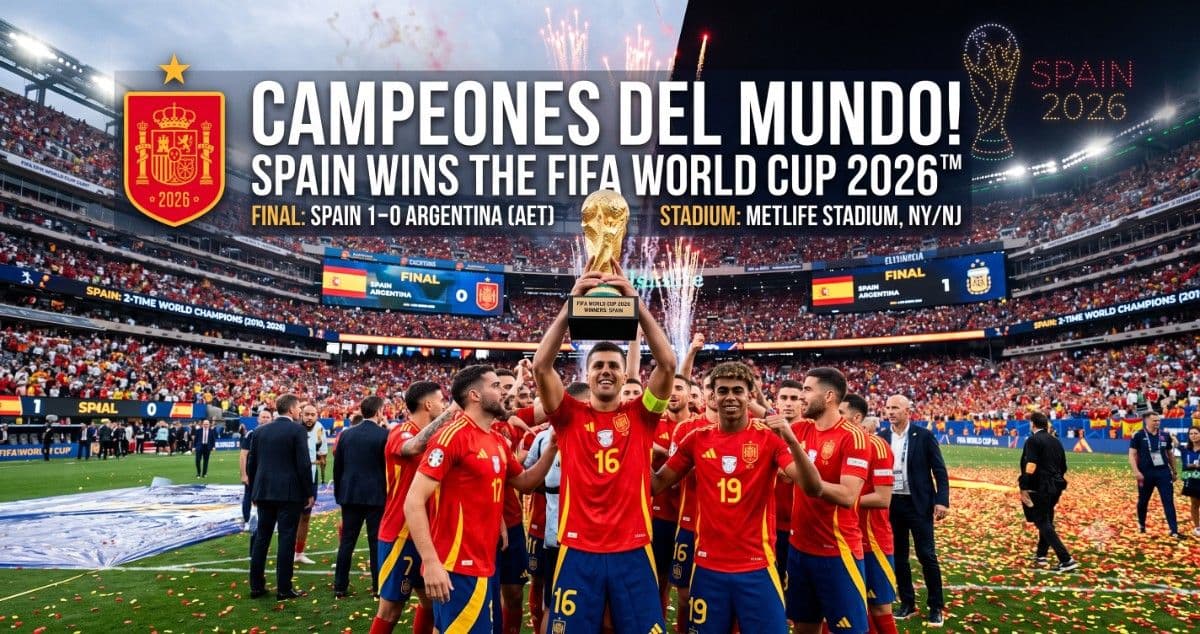
The dust has settled, the last echo of 'La Roja!' has quieted, and the biggest tournament in sporting history has concluded with a magnificent crescendo. In a final that will be talked about for generations, Spain has emerged victorious, defeating Argentina 3-2 in a breathless encounter at MetLife Stadium in New Jersey to claim their second FIFA World Cup title.
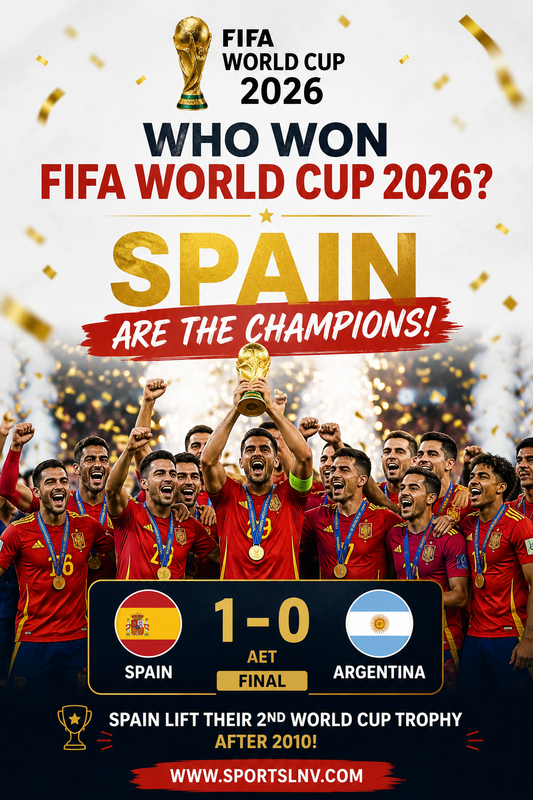
This wasn't just a football match; it was the culmination of a decade-long project for Spain and the heartbreaking near-perfection of an Argentina side that had enchanted the world once more. From Vancouver to Guadalajara, and ultimately to the massive cathedral of sport on the East Coast, the 2026 World Cup—the largest ever with 48 teams—delivered a spectacle equal to its scale. But on the final day, the story belonged to a young, vibrant, and relentless Spanish team.
The Venue, the Atmosphere, and the Anticipation
MetLife Stadium, bathed in late-afternoon sunlight, was an ocean of opposing colors: the deep, historic red and yellow of Spain, and the striking blue and white of an Argentina fanbase that has made North America a home away from home. The anticipation was palpable, a mix of reverence for past legends and desperate hope for a new glory. Spain was seeking to solidify a second golden era; Argentina, still basking in the glow of their 2022 triumph, was hunting for back-to-back titles and immortality.
When the two teams took the field, the noise was deafening, the scale of the expanded tournament fully realized in the gargantuan stadium. For Spain, the presence of veteran experience mixed with electric youth—the generational bridge that had been the story of their tournament—was a beacon of hope. For Argentina, the dream of continuing the legacy was a powerful motivator.
The Match: A Symphony of Skill and Grit
The 90 minutes that followed were a microcosm of modern football at its finest. It was a game of intricate patterns, explosive speed, and tactical brilliance. Spain, faithful to their identity, dominated possession, but this wasn't sterile domination. Under the shrewd guidance of Luis de la Fuente, 'La Roja' has evolved; they have retained the surgical passing precision that defined their 2010 win but added a devastating vertical directness.
A Strong Spanish Start
Spain started the stronger of the two. Their midfield, a masterclass of ball retention and progression, dictated the play. It was no surprise when the breakthrough came in the 22nd minute. A sequence of typical 'Tiki-Taka' ended with a sudden, vertical pass that released Spain's star forward on the right. With a low, perfectly weighted cross, he found Pedri, who had made a piercing run from midfield. Pedri, showing maturity beyond his years, side-footed the ball into the top corner, sending the Spanish support into hysterics.
The first 30 minutes belonged entirely to Spain. Their counter-pressing was fierce, suffocating Argentina's midfield.
The Argentine Fightback
Never a team to lie down, Argentina began to assert themselves. Their young, dynamic midfield, a mix of 2022 veterans and fresh talent, started to bypass the Spanish pressure. Just before the hour, the moment Argentina had been waiting for arrived. A quick breakaway found a star forward on the edge of the box. With a characteristic feint and drop of the shoulder, he created an inch of space and unleashed a curving shot that nestled into the side netting. The stadium erupted; the champions were level, 1-1 at halftime.
The Second Half: Escalation and Impact
The second half began with both teams knowing the next goal was critical. Spain continued to control the tempo, but Argentina looked increasingly dangerous on the counter. In the 67th minute, Spain regained the lead. A perfectly executed corner routine, a surprise from a team known for short passes, saw a powerful header thunder into the net from close range, giving Spain a 2-1 advantage.
But the story of Argentina has always been about resilience. They threw bodies forward, their energy infectious. In the 78th minute, a relentless attack ended with a desperate Spanish tackle inside the box. The referee pointed to the spot. Argentina’s captain, ice running through his veins, stepped up and expertly dispatched the penalty, tying the match at 2-2.
The Golden Goal and the Final Whistle
With the match tied and the specter of extra time looming, the final five minutes were played at an impossible intensity. It was Spain, though, who found one last gear. Their youth academy project, which had provided the backbone of the team, proved decisive.
In the 86th minute, a quick exchange of passes in the final third released Spain’s mercurial winger down the left flank. Showing blistering pace, he beat his man and sent in a tempting, curling ball across the six-yard box. For Spain, it was Gavi, arriving like a train, who got his toe to the ball just before the defender. The stadium held its breath as the ball spun into the bottom corner. A goal of sheer will. 3-2 Spain.
The remaining minutes, including substantial stoppage time, felt like an eternity. Argentina attacked with everything, a wave of desperate attacks, but Spain’s defense, anchored by its captain, held firm. When the final whistle eventually sounded, the Spain bench emptied, a flood of red cascading onto the pitch, as the reality of being World Cup champions for the second time set in.
The Second Star: A Legacy Secured
This victory is monumental for Spanish football. Their 2010 triumph is immortalized, but this win, with a completely different squad and a new philosophy, solidifies their position as a modern powerhouse. It validates the structural shift and tactical evolution of the past decade.
Pedri, a pillar of composure, was awarded the Golden Ball as the player of the tournament. The iconic image of him lifting the FIFA World Cup Trophy, a moment of triumph and grace, will be etched into the memory of every Spanish supporter.
Looking Ahead to 2030
As the celebrations begin in Madrid and across Spain, the football world turns its gaze to the future. The 2026 World Cup has proven that a larger, expanded format can work and that the global game is richer for it. Spain will enter the 2030 tournament, co-hosted by Spain, Portugal, and Morocco (and symbolically including Argentina, Uruguay, and Paraguay), as defending champions. The cycle of preparation, anticipation, and dreams of glory begins again, but for now, the world belongs to Spain, the magnificent champions of MetLife.
Sports LNV
Related News
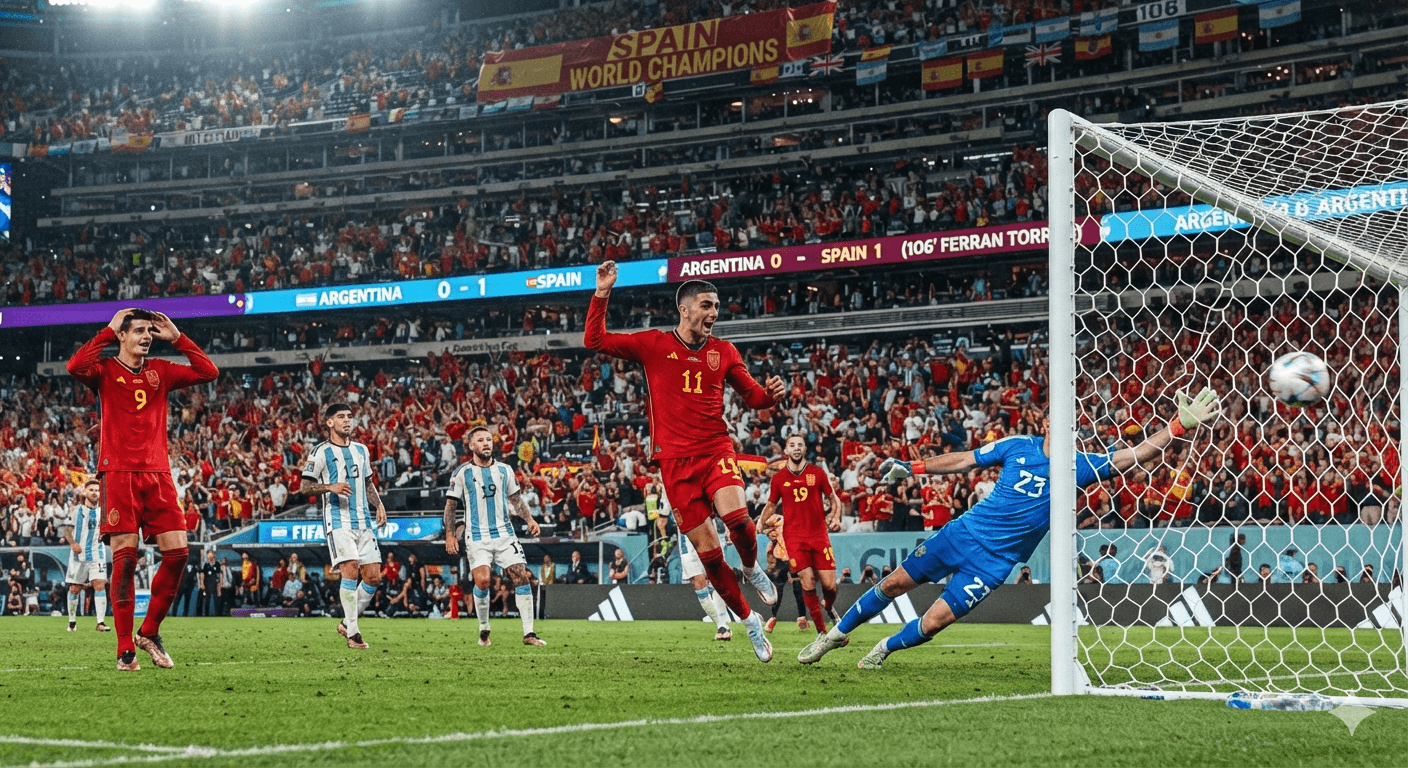 FIFA Wourld CUP
Today's World Soccer: Live Scores, FIFA World Cup 2026 Final, Dream11 Predictions & All Match
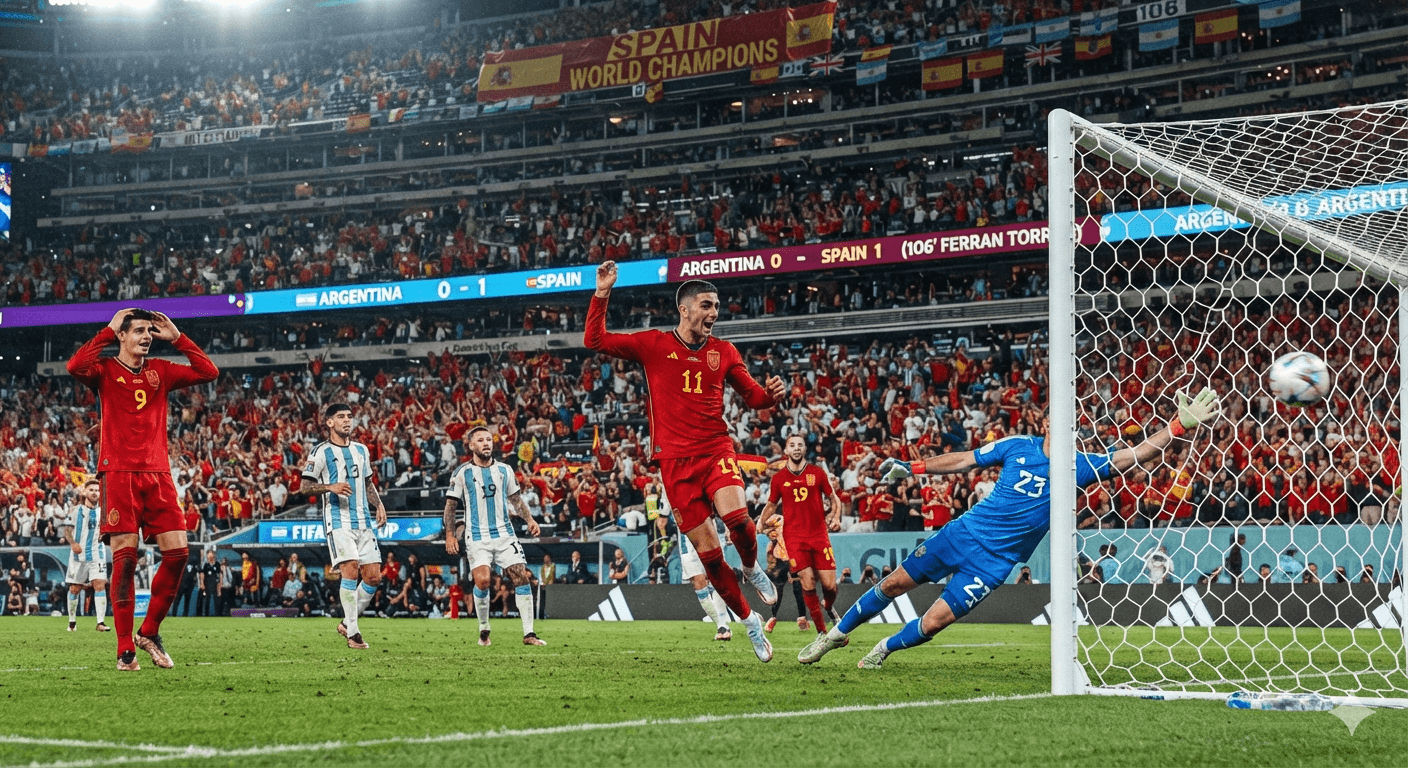 FIFA Wourld CUP
Glory in Extra Time: Spain Dethrones Argentina to Claim World Cup 2026
 FIFA Wourld CUP
Argentina vs. Spain: 2026 World Cup Final Score Predictions
 FIFA Wourld CUP