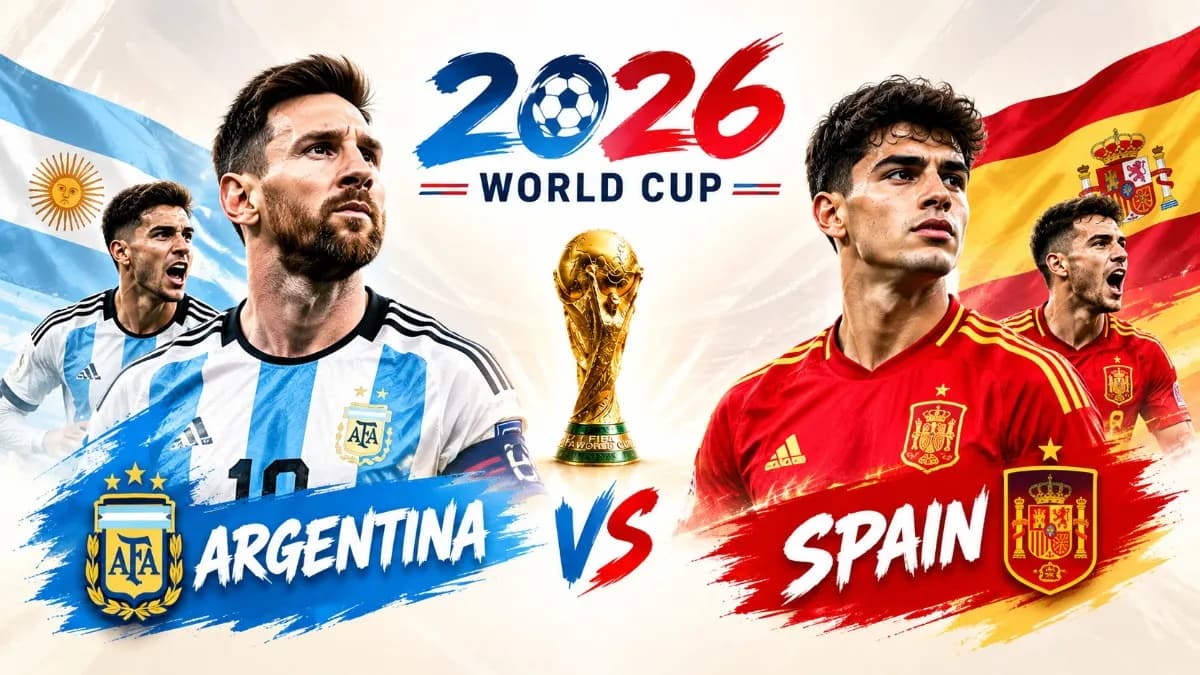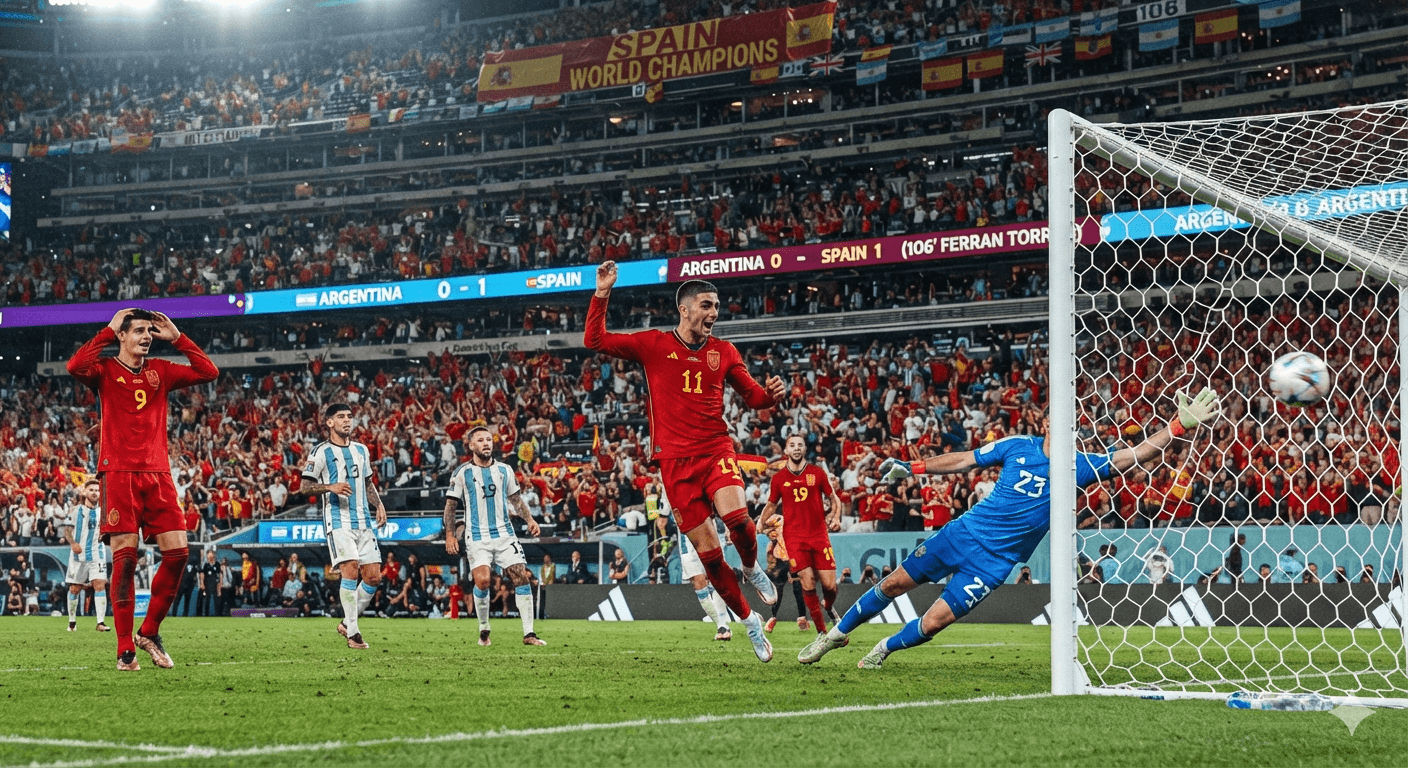
It's official: Spain are World Champions once again! La Roja defeated defending champions Argentina 1-0 after extra time in the FIFA World Cup 2026 Final, ending Lionel Messi's dream of a back-to-back title and delivering Spain's second World Cup crown, 16 years after their first. Here's the full story of an unforgettable night in New Jersey.
The final whistle at New York/New Jersey Stadium on Sunday, July 19, brought the curtain down on the biggest, most-attended World Cup in history — and it did so with one of the most one-sided finals ever played, decided by a single moment of quality deep into extra time. Below, we break down everything that happened: the match itself, the individual awards, the records that fell, and what comes next for two of the game's greatest-ever players.
Full Time: Spain 1-0 Argentina (after extra time)
Spain are the 2026 FIFA World Cup champions after a 1-0 extra-time win over Argentina at the New York/New Jersey Stadium (MetLife Stadium) in East Rutherford. Substitute Ferran Torres struck the decisive blow in the 106th minute, rifling home after Nico Williams headed a cross into his path, sending the Spanish end of the stadium into delirium and confirming La Roja's second world title, following their first in South Africa in 2010.
It was a night of total domination that somehow finished level for well over 100 minutes. Spain racked up an extraordinary 20 shots to Argentina's two, and finished with an expected-goals tally of close to 1.9 compared to Argentina's 0.2 — numbers that undersell just how comprehensively Luis de la Fuente's side controlled the game. Argentina, remarkably, did not manage a single shot on target across the full 120 minutes. Only the heroics of goalkeeper Emiliano Martínez, who set a new record for saves in a World Cup final, kept the scoreline level for as long as it did.
How the Final Unfolded
A Cagey First Half
For long spells of the opening 45 minutes, this looked like it might be remembered as one of the more nervous, low-event finals in recent memory. Spain, as they had throughout the tournament, dominated possession and territory, but a well-organised Argentina defence — built around the experienced pairing at centre-back and the reliability of Martínez behind them — refused to be broken down. Messi's best moment of the entire match arguably came in just the fifth minute, when a clever pass from Julián Álvarez sent him clean through on goal with only Unai Simón to beat; the Spanish goalkeeper got there first and cleared the danger, and Argentina never created a clearer sight of goal for the rest of the game.
Spain, by contrast, continued to build pressure without finding the breakthrough. Their approach was patient rather than desperate — the same suffocating, possession-heavy style that had defined their entire campaign, evolved this tournament to carry more of a direct, vertical edge whenever gaps appeared. But Martínez stood firm, and the sides went into the break locked at 0-0.
Spain Push, Argentina Resist
The second half followed a similar pattern, only with the pressure cranked up several notches. Spain created a series of genuine chances, including one clear opportunity that Martínez did brilliantly to keep out. One of the most dramatic moments of normal time came in the 55th minute, when a slick passing move sent the ball into the box for Dani Olmo, whose cutback was almost turned home by Marc Cucurella — only for Argentina defender Gonzalo Montiel to intervene at the last possible moment and divert the ball behind for a corner.
Argentina, for their part, were content to sit deep, soak up pressure and rely on moments of individual quality from Messi to change the game. Those moments never quite arrived. As the clock ticked past the hour mark and deep into stoppage time, the tension inside the stadium became almost unbearable, with both sets of fans sensing that a single mistake or moment of magic could decide the destiny of the trophy.
The Turning Point: A Red Card in Stoppage Time
Just when it looked as though the match was destined for extra time on level terms regardless, the contest turned firmly in Spain's favour in the third minute of second-half stoppage time. Argentina's Enzo Fernández, already on a yellow card for one of several bookings picked up by the Albiceleste midfield as they tried to disrupt Spain's rhythm, was shown a second yellow and sent off, leaving Argentina to play the remainder of the match with ten men.
There was late final drama even before that, too — Spain thought they had snatched a dramatic late winner in normal time through Nico Williams, only for the goal to be ruled out for a foul committed by Mikel Merino on Nicolás Otamendi in the build-up. The would-be matchwinner was chalked off, and the final went to extra time still goalless.
Extra Time: Ferran Torres Writes His Name Into History
With Argentina down to ten men and visibly running on fumes, the outcome felt increasingly inevitable — but Martínez continued to defy Spain time and again, saving everything thrown at him. The breakthrough finally arrived just 37 seconds into the second period of extra time, in the 106th minute. A cross into the Argentina box was kept alive by a Nico Williams header, the ball dropping invitingly for substitute Ferran Torres just inside the area. Torres didn't overthink it, driving a low, powerful strike underneath the crossbar and beyond the despairing dive of Martínez to send the Spanish end of the stadium into raptures.
It was Spain's 12th shot on target of the game — Argentina, remarkable as it sounds, finished with zero. Spain saw out the remaining minutes comfortably, and when the final whistle sounded, La Roja's players collapsed into celebration as the realisation set in: they were, for the second time in their history, champions of the world.
Messi's Night: A Quiet Ending to a Golden Career
For Lionel Messi, this was supposed to be the perfect final chapter — a chance to become just the second man in football history, and the first since the 1960s, to captain his country to back-to-back World Cup titles. It wasn't to be. Messi finished the game with just 15 touches, well below the 26 recorded by Spain's teenage sensation Lamine Yamal, and was unable to find the space or service that had fuelled Argentina's run through the tournament's earlier, more chaotic knockout rounds.
It's worth remembering just how dramatic Argentina's path to the final had been. The defending champions needed extra time to see off Cape Verde in the Round of 32 and Switzerland in the quarter-finals, before edging past England 2-1 in a bruising semi-final. Sunday's final, by contrast, never allowed Argentina's emotional, backs-to-the-wall style to click into gear — Spain's control was simply too complete.
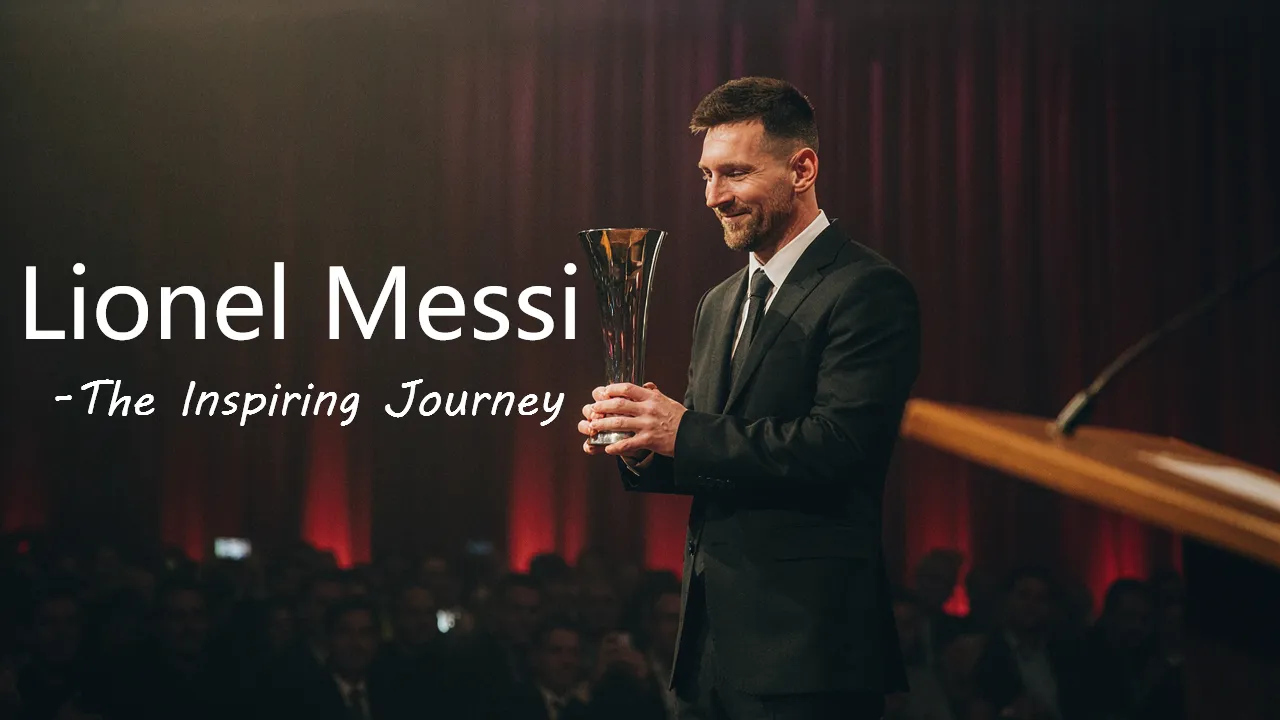
Messi has indicated that the 2026 tournament will be his last World Cup, meaning Sunday's defeat is likely to stand as his final match on football's biggest stage — a quiet, uncharacteristic finish for a player who has spent two decades redefining what's possible with a football at his feet. Argentina boss Lionel Scaloni was visibly emotional afterwards, and few in the game would dispute that Messi's status as one of the greatest to ever play the sport remains untouched by how this particular final unfolded.
Individual Awards: Spain Sweep the Honours
FIFA confirmed the tournament's individual awards shortly after the final whistle, and it was a near-clean sweep for the newly crowned champions:
- Golden Ball (Best Player): Rodri (Spain) — recognised for his role in controlling games from Spain's midfield throughout the tournament, adding to the Ballon d'Or he won in 2024.
- Golden Boot (Top Scorer): Kylian Mbappé (France) — finished with 10 goals, two clear of Messi, becoming the first player to win the World Cup Golden Boot on two separate occasions (2022 and 2026) after a double in France's third-place playoff win over England.
- Golden Glove (Best Goalkeeper): Unai Simón (Spain) — conceded just a single goal across the entire tournament.
- Young Player of the Tournament: Pau Cubarsí (Spain) — the 19-year-old defender capped a remarkable summer with individual honours to match the team's success.
- FIFA Fair Play Award: Netherlands — awarded to the team with the best disciplinary record across the tournament.
Messi had to settle for silver in the race for the Golden Ball, with Mbappé taking bronze despite France's fourth-place finish. It's a measure of how dominant Spain's campaign was that they claimed the Golden Ball, Golden Glove and Young Player award, on top of the trophy itself.
By the Numbers: A Final for the Record Books
Statistically, this was one of the most one-sided finals the World Cup has ever produced:
- Spain finished with 20 shots to Argentina's 2 — Argentina failed to register a single shot on target across 120 minutes.
- Spain's expected goals (xG) total was roughly 1.9, compared to Argentina's 0.2.
- Spain held around 60% possession for the match.
- Emiliano Martínez set a new record for the most saves by a goalkeeper in a World Cup final, with 11.
- Spain conceded just one goal in the entire tournament — an astonishing defensive record across seven matches.
- The expanded, 48-team tournament drew a total attendance of nearly 6.81 million fans across 104 matches, an average of over 65,000 per game — a new record for the competition.
The Road to New Jersey: How Both Teams Got Here
Spain's Ruthless Consistency
Luis de la Fuente's side were, by a distance, the most defensively watertight team at the tournament, conceding only once across the entire campaign. Their run to the final included a comfortable dismissal of France in the semi-final, continuing a pattern of professional, controlled performances that rarely allowed opponents any sustained foothold in matches. It's a remarkable turnaround from a Spain side that, as recently as 2014, went out at the group stage as defending champions — this generation, forged around the same possession principles but with considerably more attacking directness, has now delivered both a European Championship and a World Cup in the space of a few years.
Argentina's Rollercoaster Campaign
Argentina's route to the final could not have been more different — three separate knockout matches that required extra time or came down to the wire, against Cape Verde, Switzerland and England, before running into a Spanish side playing at the peak of its powers in the final itself. It's an ending that will sting for a squad that fought so hard to get there, but reaching a third consecutive World Cup final is still a monumental achievement in its own right, and a further testament to the culture Scaloni has built since taking charge.
What Comes Next?
For Spain, Sunday's win completes a remarkable double — European champions and world champions inside the same handful of years — and sets up a shot at back-to-back World Cup titles when the tournament returns in 2030. No side has won consecutive World Cups since Brazil managed the feat in 1958 and 1962, and with a squad built around young stars like Cubarsí, Yamal and Rodri, Spain will head into the next cycle as one of the clear favourites once again.
For Argentina and Messi, the immediate future is less certain. Messi has suggested this was his final World Cup, though he has hinted at retirement before only to return, and a place in the 2028 Copa América has not been ruled out. Whatever comes next, Sunday's defeat does little to dent a legacy built over two decades of extraordinary football — Scaloni himself was seen fighting back tears afterwards while praising Messi as one of the greatest to ever play the game.
Scenes From Around the World
The final's aftermath played out very differently on either side of the Atlantic. In Madrid, wild celebrations broke out across the Spanish capital as fans poured into the streets to mark the country's second World Cup triumph. In Buenos Aires, the mood in the city's public viewing squares turned somber as the game slipped away, with tempers briefly flaring on the pitch after the final whistle before Scaloni himself stepped in to help calm things down.
On the pitch at MetLife Stadium, the trophy presentation brought its own moment of controversy, with U.S. President Donald Trump walking out alongside FIFA president Gianni Infantino to boos from sections of the crowd, shortly before Spain's players were presented with the World Cup itself.
The Halftime Show and Tournament Send-Off
Sunday's final wasn't just a football spectacle — the halftime show brought together an enormous lineup of performers, with Shakira delivering the tournament's official anthem alongside Burna Boy, joined later by Coldplay's Chris Martin, BTS and Justin Bieber for a closing performance built around a message of unity, complete with pyrotechnics to send off the most-attended World Cup in history in style.
Player Ratings: How the Two Teams Graded Out
Spain's Standouts
Unai Simón was every bit the commanding presence Spain needed between the posts, dealing calmly with the one real chance he faced from Messi in the opening minutes and marshalling his defence throughout. His reward, a Golden Glove for conceding just once all tournament, was thoroughly deserved.
Rodri once again looked like the conductor of this Spain side, dictating tempo from deep, breaking up Argentina's rare forward bursts, and rarely wasting a pass. It's little surprise FIFA's technical panel handed him the Golden Ball; his influence on Spain's ability to control matches has been a constant thread running through the entire tournament, not just the final.
Pau Cubarsí, still only 19, was composed and assured at the back for the entire 120 minutes, epitomising the calm that has defined Spain's defensive record throughout the summer. His Young Player of the Tournament award capped off a coming-of-age campaign.
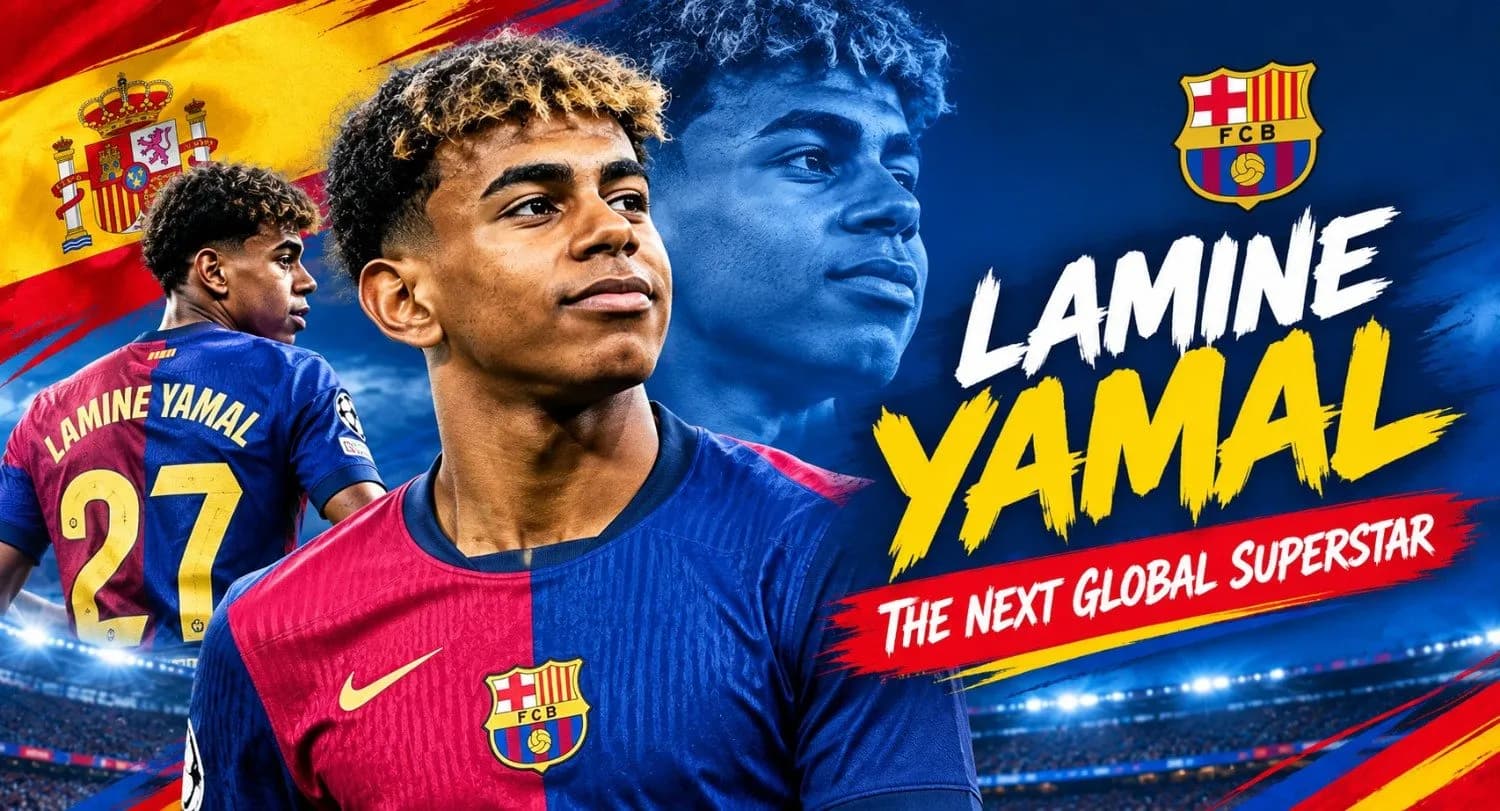
Lamine Yamal continued to torment defenders all night, registering far more touches than Messi and repeatedly finding pockets of space down the right. He didn't get his name on the scoresheet in the final itself, but his overall body of work across the tournament confirmed his status as one of the sport's brightest young talents.
Ferran Torres, introduced from the bench, needed just one meaningful contribution to write himself into World Cup folklore — his 106th-minute strike will be replayed in Spain for decades to come.
Argentina's Standouts
Emiliano Martínez was, by a distance, Argentina's best performer on the night, and arguably the best goalkeeper of the entire tournament. His 11 saves in the final alone set a new World Cup record, and without him the scoreline could have been embarrassingly one-sided well before extra time.
Lionel Messi struggled to find his usual pockets of influence against a well-drilled Spanish defence, but his overall tournament — eight goals and four assists, enough to finish runner-up for the Golden Ball at 39 years old — was still a remarkable send-off by any normal standard, even if it fell short of the fairytale many had hoped for.
Julián Álvarez combined well with Messi in the early stages and was involved in Argentina's best chance of the match inside the first five minutes, but found the service drying up as Spain gradually seized total control of the game.
Reaction: What the Players and Coaches Said
Speaking after the match, goalscorer Ferran Torres described the emotion of the moment as an enormous release of pressure, admitting that facing a Messi-inspired Argentina in a final always brings extra nerves regardless of the scoreline. He credited Spain's insistence on sticking to their own style of play, even under pressure, as the difference in the end.
Argentina manager Lionel Scaloni was full of praise for his captain afterwards, reportedly fighting back tears as he described Messi as the best player to ever step onto a football pitch — a tribute that resonated across the football world regardless of allegiance, given how the final itself had gone.
Spain boss Luis de la Fuente, meanwhile, used his press conference to reflect on how his side had managed to nullify Messi's influence for almost the entire match, praising his players' tactical discipline and defensive shape as the foundation for a campaign that conceded just once in seven games.
Tournament in Review: The Bigger Picture
Sunday's final was the culmination of a genuinely historic World Cup — the first to feature 48 teams, and the first ever to be jointly hosted by three nations across North America. The expanded format brought new countries to the World Cup stage for the first time, including tournament debutants Cape Verde, whose run to the Round of 32 (where they pushed Argentina all the way to extra time) was one of the feel-good stories of the group stage.
Elsewhere in the knockout rounds, England's wild 6-4 win over France in the third-place playoff produced one of the most remarkable scorelines in modern World Cup history, with Kylian Mbappé's brace in that game proving just enough to seal his second career Golden Boot. The Netherlands, meanwhile, were recognised for their discipline on the pitch throughout the tournament, taking home the Fair Play Award as the competition's best-behaved side.
Attendance figures shattered every previous record for the competition — organisers confirmed a total of close to 6.81 million fans passed through turnstiles across the 104 matches played, working out to an average crowd of more than 65,000 per game, a striking figure for a tournament that stretched across dozens of cities in the United States, Canada and Mexico.
Spain's Golden Generation: Putting the Win in Context
Spain's first World Cup win, back in 2010 in South Africa, was built on the legendary tiki-taka generation of Xavi, Andrés Iniesta and Carles Puyol. Sixteen years on, this triumph belongs to a very different, considerably younger group of players — several of this squad, including Cubarsí and Yamal, weren't even born when Spain lifted their first trophy.
What connects the two eras is a continued commitment to Spain's possession-based footballing identity, even as the current squad has added a sharper, more direct attacking edge under de la Fuente. Combined with their European Championship win, Spain now hold both of international football's biggest prizes simultaneously — a feat that places this generation firmly in the conversation with the finest international sides of the modern era.
Looking ahead, Spain will enter the 2030 World Cup, set to be jointly hosted by Spain, Portugal and Morocco (with a handful of matches also played in South America to mark the tournament's centenary), as one of the outright favourites and with a genuine chance to become the first side since Brazil in 1958 and 1962 to win back-to-back titles.
Frequently Asked Questions
What was the final score of the 2026 World Cup Final?
Spain beat Argentina 1-0 after extra time, with Ferran Torres scoring the only goal of the game in the 106th minute.
Who won the Golden Ball at the 2026 World Cup?
Spain's Rodri was named the tournament's best player and awarded the Golden Ball, ahead of Lionel Messi and Kylian Mbappé.
Who won the Golden Boot?
Kylian Mbappé finished as top scorer with 10 goals, becoming the first player to win the World Cup Golden Boot twice, having also topped the scoring charts in 2022.
Was this Lionel Messi's last World Cup?
Messi has indicated that the 2026 tournament was his last World Cup, as he would be 43 by the time the next edition takes place in 2030. He has previously suggested a tournament would be his last before returning, so nothing is entirely certain.
Is this Spain's second World Cup title?
Yes. Spain's only previous World Cup win came in 2010 in South Africa. This victory also means Spain currently hold both the World Cup and the European Championship at the same time.
Where will the next World Cup be held?
The 2030 FIFA World Cup is scheduled to be jointly hosted by Spain, Portugal and Morocco, with select centenary matches also taking place in South America.
Tactical Breakdown: Why Spain Won
Rewatch the final and one thing stands out above all else: Spain simply never allowed Argentina to play their own game. Scaloni's side have built their entire identity over the last four years around emotional intensity, physical duels, and moments of individual brilliance when the structure breaks down — and Spain's midfield, marshalled by Rodri and supported by the tireless running of Pedri and Fabián Ruiz, refused to let that structure break down at all.
Spain's full-backs were noticeably cautious for long spells, picking their moments to join the attack rather than committing bodies forward and risking exposure to Argentina's transition play — the one avenue through which Messi has punished so many opponents throughout his career. By denying Argentina space in behind and forcing them to build patiently through midfield, an area where Spain enjoyed total control, De la Fuente's side effectively strangled the life out of the game long before Torres's winner arrived.
Argentina, for their part, leaned heavily on the disruptive, combative instincts that had carried them through three separate extra-time knockout battles — Enzo Fernández, Leandro Paredes and Lisandro Martínez were all booked as they tried to break up Spain's rhythm any way they could. But without the ball, and without the space in behind to spring Messi and Álvarez into dangerous positions, Argentina's approach gradually ran out of road, and the sending-off in stoppage time only accelerated the inevitable.
Argentina's Heartbreak: A Closer Look
There will be no shortage of soul-searching in Buenos Aires over how a team that fought so hard to reach a third consecutive final came up so short on the biggest stage of all. Argentina's knockout run had been built almost entirely on resilience — three matches in a row that needed extra time to be settled — and there was a sense throughout the final that Scaloni's side were still waiting for one of those trademark late twists to arrive.
It never did. Argentina managed zero shots on target across a full 120 minutes, an almost unthinkable statistic for a team featuring Messi, Álvarez and a supporting cast good enough to have won the tournament outright four years earlier in Qatar. The sending-off of Enzo Fernández compounded matters, but in truth Argentina had already been outfought and outthought for long periods, saved only by the brilliance of Emiliano Martínez between the posts.
For a golden generation that delivered Argentina's third World Cup in Qatar in 2022, Sunday's defeat closes the book on the Messi era in disappointing fashion — but it does little to diminish what this group of players has achieved together over the best part of a decade, including a World Cup title, two Copa América triumphs, and now back-to-back World Cup final appearances.
A Final Decided Late: Historical Context
Sunday's match becomes only the fourth World Cup final in the tournament's history to be settled in extra time following a goalless 90 minutes, joining a shortlist of the competition's most tense, tightly fought showpieces. It's a fitting entry into that company — a final defined not by end-to-end attacking football, but by a defensive masterclass from two goalkeepers, a red card, a disallowed goal, and ultimately one moment of composure from a substitute in the second period of extra time.
For neutral fans, it may not go down as the most thrilling final in World Cup history in terms of goalmouth action, but few matches have carried this much tension from start to finish, with both sets of supporters aware that a single mistake, moment of magic, or refereeing decision could swing the destiny of the trophy at any point.
Spain's Knockout Run: The Full Picture
Spain's path to the final was, fittingly, built on the same defensive foundation that carried them through the showpiece match itself. Having opened their campaign with a surprise draw against tournament debutants Cape Verde, De la Fuente's side steadily grew into the competition, conceding just once across their remaining six matches on the way to the final. Their semi-final win over France, in particular, was held up afterwards as a statement performance — a professional, controlled display against one of the pre-tournament favourites that left little doubt about which side deserved to be playing in New Jersey on the final Sunday.
That defensive record — one goal conceded in seven matches across an expanded, 48-team World Cup — will likely be remembered as one of the most remarkable achievements of the entire tournament, regardless of how the final itself is remembered in years to come.
Final Word
The 2026 FIFA World Cup will be remembered for its scale — 48 teams, three host nations, and record-breaking attendance across the board — but its final will be remembered for the contrast at its heart: a young, relentless Spanish side that never stopped creating chances, and a proud, battle-hardened Argentina side that simply ran out of answers, and ultimately players, at the very end. Ferran Torres's 106th-minute strike will go down as the goal that delivered Spain's second star, denied Lionel Messi a fairytale ending, and confirmed this Spanish generation as one of the finest the sport has produced.
What did you make of the final? Was Spain's dominance thoroughly deserved, or could Argentina have found a way through with a little more luck? Drop your thoughts in the comments!
Sports LNV